
CCTV for owners' associations
Owners' association CCTV (VvE)
How does your owners' association (VvE) keep an eye on the entrance, lift and car park? Owners' association CCTV (VvE) makes it possible.
RRB Security installs and maintains CCTV systems for owners' associations. Including advice on privacy and the GDPR (AVG in Dutch), and secure viewing of footage in the app.
Security specialist since 1995

31years of experience
- 1995Active since
- VvE specialistPrivacy and GDPR
- AJAX appRemote viewing
- Leading brandsProven quality
Trusted across the Benelux
These organisations trust our solutions




























Specialised in CCTV for owners' associations (VvE)
Every year, a growing number of VvEs rely on RRB Security for professional CCTV.
We take care of the entire process: from the first quote and expert installation to ongoing support, proactive management and periodic maintenance. Thanks to real-time monitoring, we make sure your system keeps working optimally.
This is how we ensure a reliable, secure and efficient CCTV system. Today and in the future.
CCTV for owners' associations
How we provide CCTV for your VvE
From the first quote and installation to support, management and periodic maintenance: we take care of the entire process for your owners' association.
No-obligation on-site quote
We look at your building complex on site and discuss the wishes of the VvE. You then receive an open quote with every component itemised.
Specialist in VvE CCTV
We tailor the CCTV system to your building and neighbourhood, from the entrance to the lift and car park. We also advise on privacy and regulations.
Management, support and service plan
With a service plan, your VvE has a fixed contact person and can rely on our service desk. We actively keep the system and its updates up to date.
Leading-brand equipment and maintenance
We work exclusively with leading-brand products and install them professionally. Periodic maintenance keeps the system reliable for all residents.
View camera footage securely and remotely with AJAX
With the AJAX app, the board or the property manager views the camera footage securely and remotely. No fixed internet connection in the complex? Then we connect the system via 5G.
This makes it easier for the VvE to comply with its camera protocol: limited and recorded access to the footage. Read more about the AJAX alarm system.
AI-driven CCTV
Searching camera footage has never been so simple. 'AI-based' object recognition makes finding events easier than ever.
Search easily for people, animals or cars. With AJAX video surveillance, tracing incidents has become child's play.
Would you like to know who AJAX is and what else the brand makes? Read more about AJAX Systems.
Ultra-fast and reliable notifications
Without technical knowledge, set up scenarios yourself to receive notifications and trigger actions.



AJAX app
Finding camera footage in the AJAX app

AI for super-fast searching of camera footage
Using AI and metadata makes searching camera footage very easy.
The timeline shows what the camera has seen. You can also easily filter by people, animals and cars.
So you can always find what you are looking for in no time, anywhere. You can also set up push notifications when people, animals and cars are detected.
Searching for incidents has never been so simple
With the system notifications in the AJAX app, you can jump to specific moments very easily. Finding camera footage of people, cars or animals in an app has never been this simple.
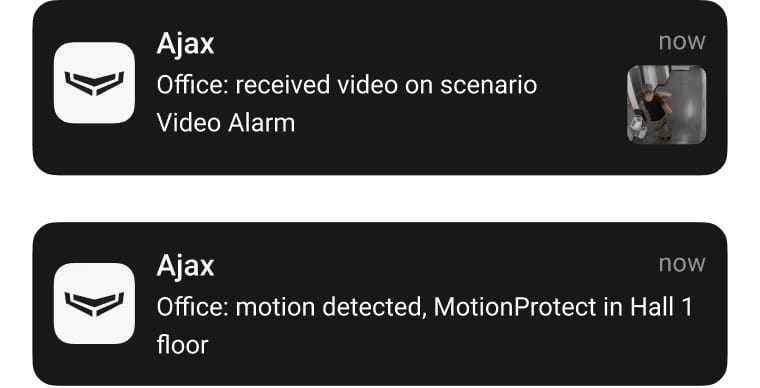
AJAX video wall for optimal ease of use
Bring all your security cameras together in one overview. Whether you have one location or several.
Your camera footage can be called up in an instant and arranged to your own preference.
Not only your security cameras, but also the AJAX DoorBell, intrusion detectors and comfort-line devices can easily be viewed in the same app.
Person detection in a VvE
For a VvE, person detection means looking specifically at the entrance, the bicycle storage and the car park, instead of going through hours of footage.
An instant notification to the board or property manager
When the camera sees a person or a car, the user gets a notification on their phone. That can be the board or the manager of the complex.
Find incidents quickly
That way, after an incident in the bicycle storage or car park, the VvE finds out in no time what happened.
- Recognises people and vehicles, so you can search in a targeted way
- A notification on the phone for people, cars or pets, for example for the board or the property manager
- You set up scenarios yourself without technical knowledge
- Search footage by people, animals or cars, anytime and anywhere
- Only users invited by the board can watch, in line with the VvE's camera protocol
Why do VvEs choose CCTV?
For many complexes, CCTV is now a matter of course. These are the main reasons.
More on why VvEs choose CCTV
RRB Security has been providing owners' associations with CCTV solutions for years. Fitting your complex with CCTV has (unfortunately) become perfectly normal. Here are a number of reasons why VvEs choose security cameras:
Fighting crime with camera security
Unfortunately, crime is a common occurrence for owners' associations too. With VvE CCTV, potential offenders can be captured on camera. By using modern, high-quality security cameras, we make sure there is no doubt about the identity of the offenders.
A sense of safety through security cameras
A CCTV system can greatly increase the sense of safety for residents. Many residents do not feel watched at all and appreciate CCTV. We make sure there is a clear protocol that can be communicated to residents, so that there is no doubt about how the CCTV footage is used.
Preventing vandalism before it happens
Vandalism within VvE complexes is probably the most common problem. It is caused not only by loitering youths but also by residents.
Video surveillance often solves this problem preventively. And if prevention doesn't work, it at least gives a clear indication of who did it.
Gathering evidence with camera security
If there is no indication of the offender, the police will not start an investigation. By supplying modern, high-quality camera footage, the police can search for offenders in a targeted way and damages can be recovered.
Unfortunately, this is a hard requirement before the police can start an investigation. The police have too little capacity, so the case would otherwise end up at the bottom of the pile.
Deterrent effect of CCTV
CCTV deters. Potential offenders are put off by the video surveillance, which saves not only time but also money for you and your VvE.
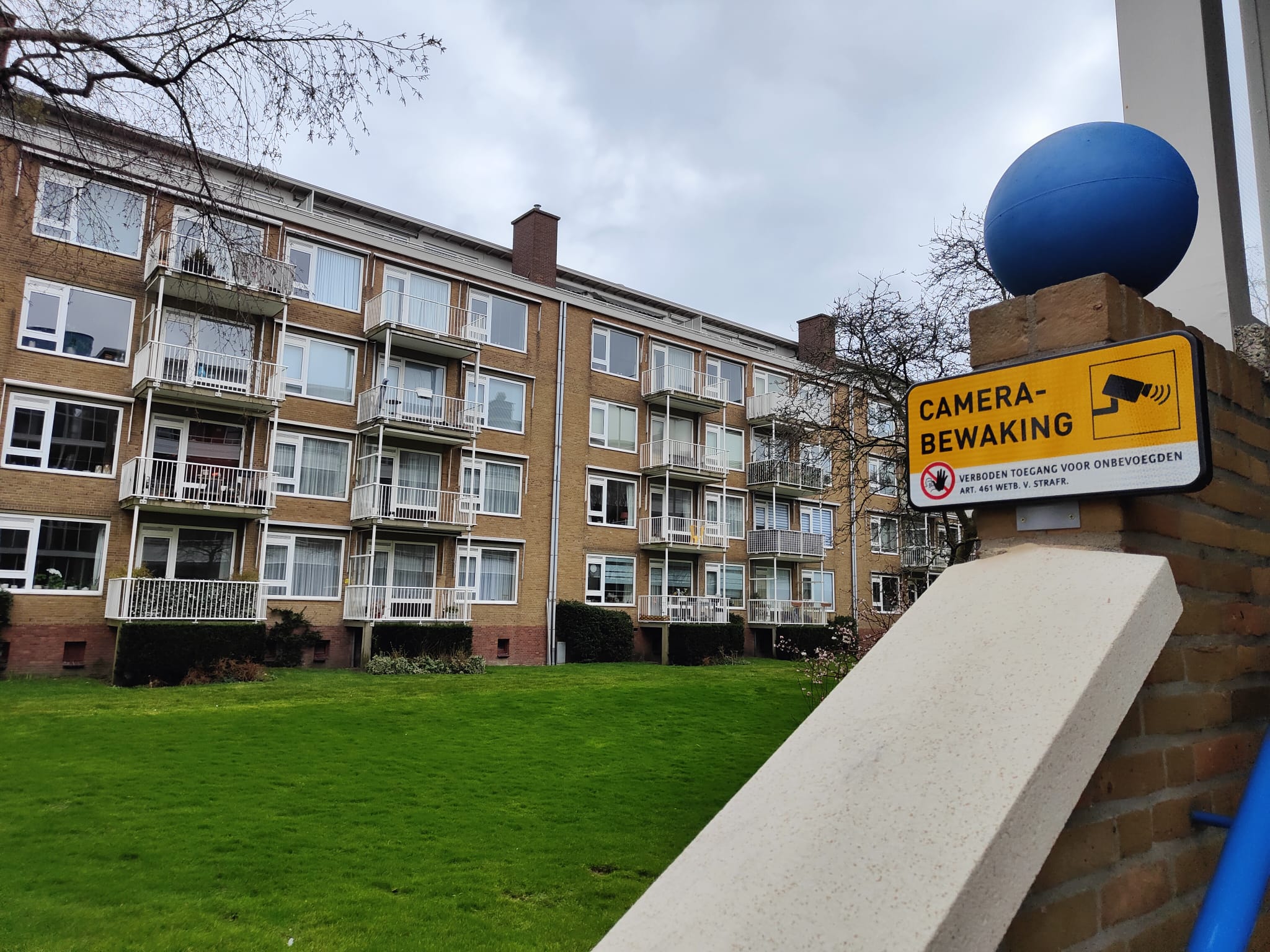
Besides the security cameras themselves, we also make it clear with stickers and signs that CCTV is in use. This is also a requirement of the GDPR.
Parking damage
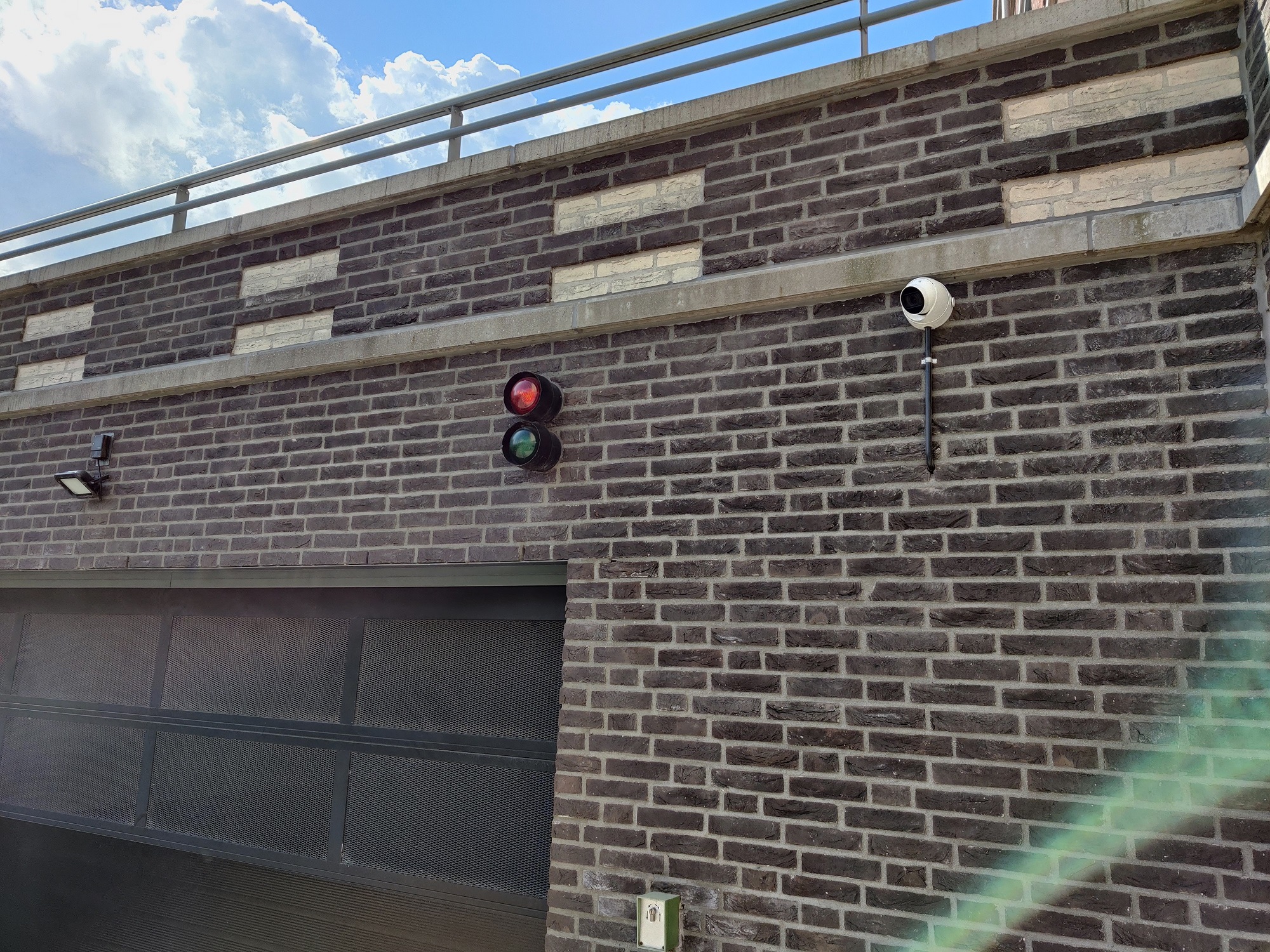
Parking damage is also a frequently heard problem. CCTV in your VvE puts an end to it. If a car causes damage, we make sure the number plates are clearly visible on camera.
Parking damage is often an annoying subject, as by no means everyone leaves a note. That is why it is common nowadays for cameras to be aimed specifically at parking spaces.
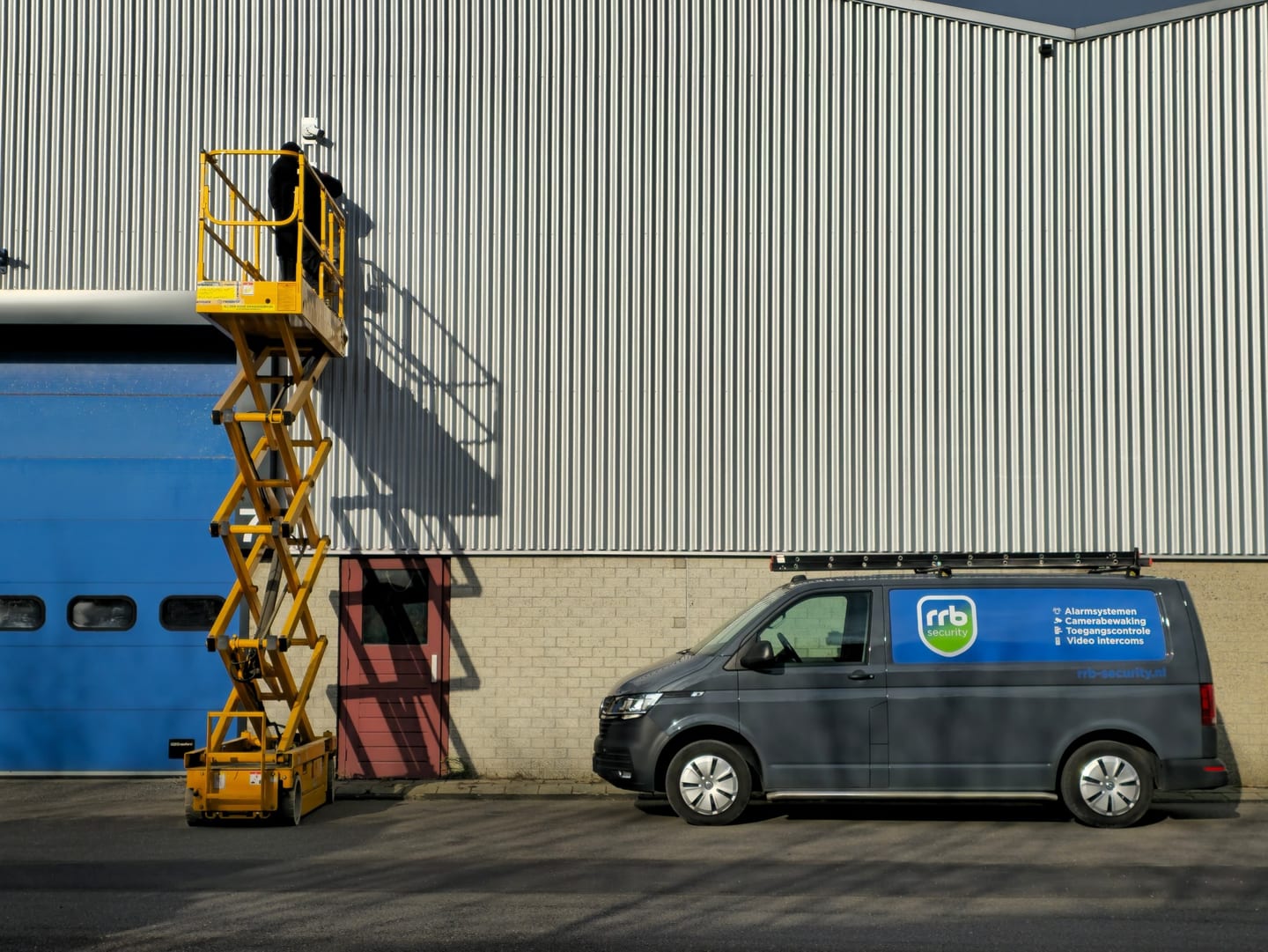
Experience with VvEs
No two buildings or neighbourhoods are the same, from burglary to fly-tipping. We tailor the CCTV system to the wishes of your VvE. Also read more about camera security for apartments and security cameras in The Hague.
RRB Security has installed CCTV systems for, among others, VvE Segbroekhof in The Hague (five complexes), VvE Helena aan Zee in The Hague, VvE Waardeburcht and Zuylenburcht in Barendrecht and VvE Pietersberg in Capelle aan den IJssel.
We are happy to share our (VvE) references in a personal meeting.
- Free on-site quote
- Advice on privacy and regulations
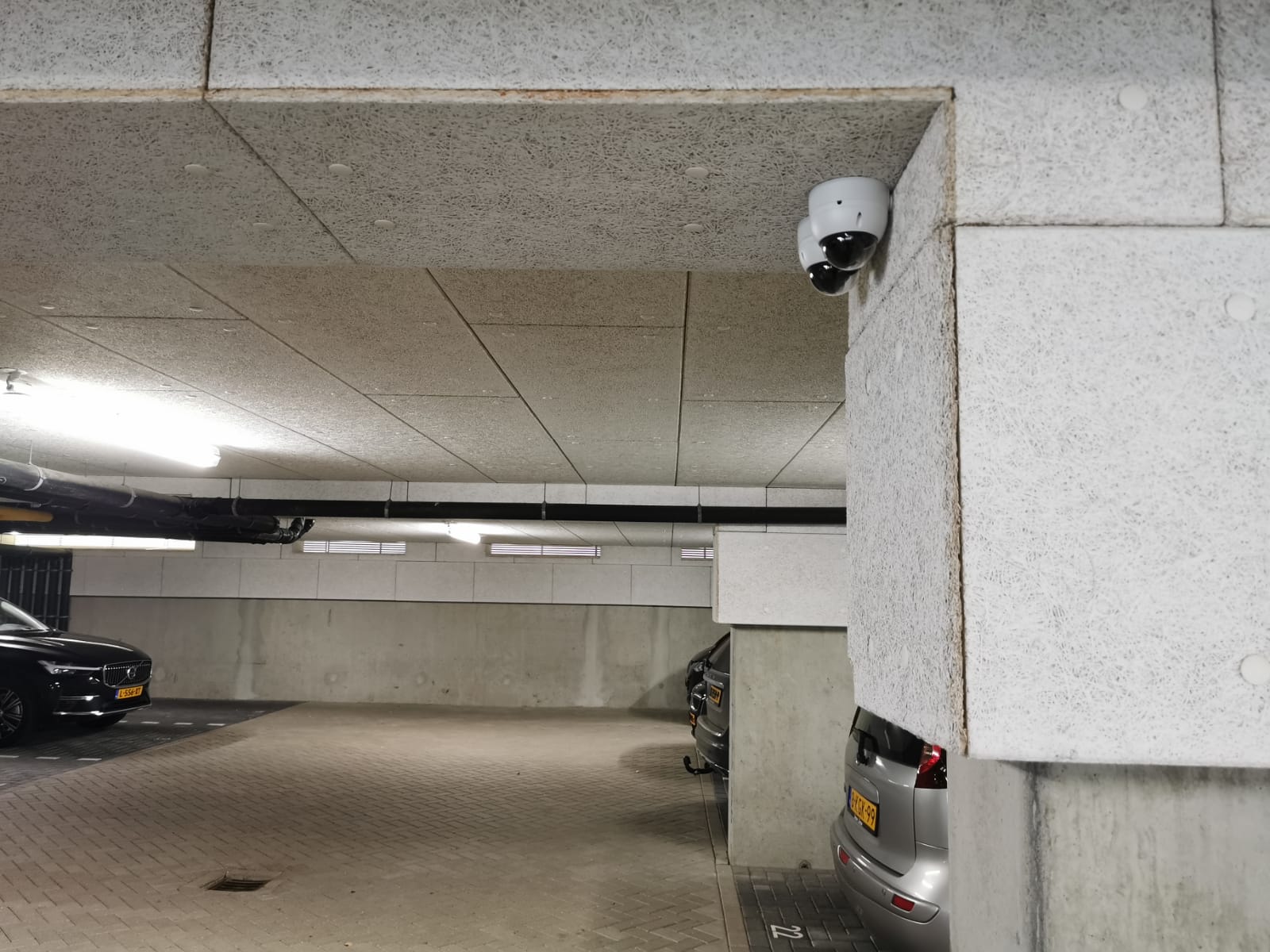
- Surveillance in lifts and car parks
- Fixed contact person and short lines of communication
- Open quotes and service plans
- Active since 1995
More about CCTV for your VvE
Every VvE has different camera security needs
No two buildings are the same when installing VvE CCTV. And every neighbourhood has its own problems, whether that is crime or fly-tipping.
We make sure a CCTV system matches the wishes of the VvE.
Our advisers use their many years of expertise to put together technical security solutions that suit your specific security questions.
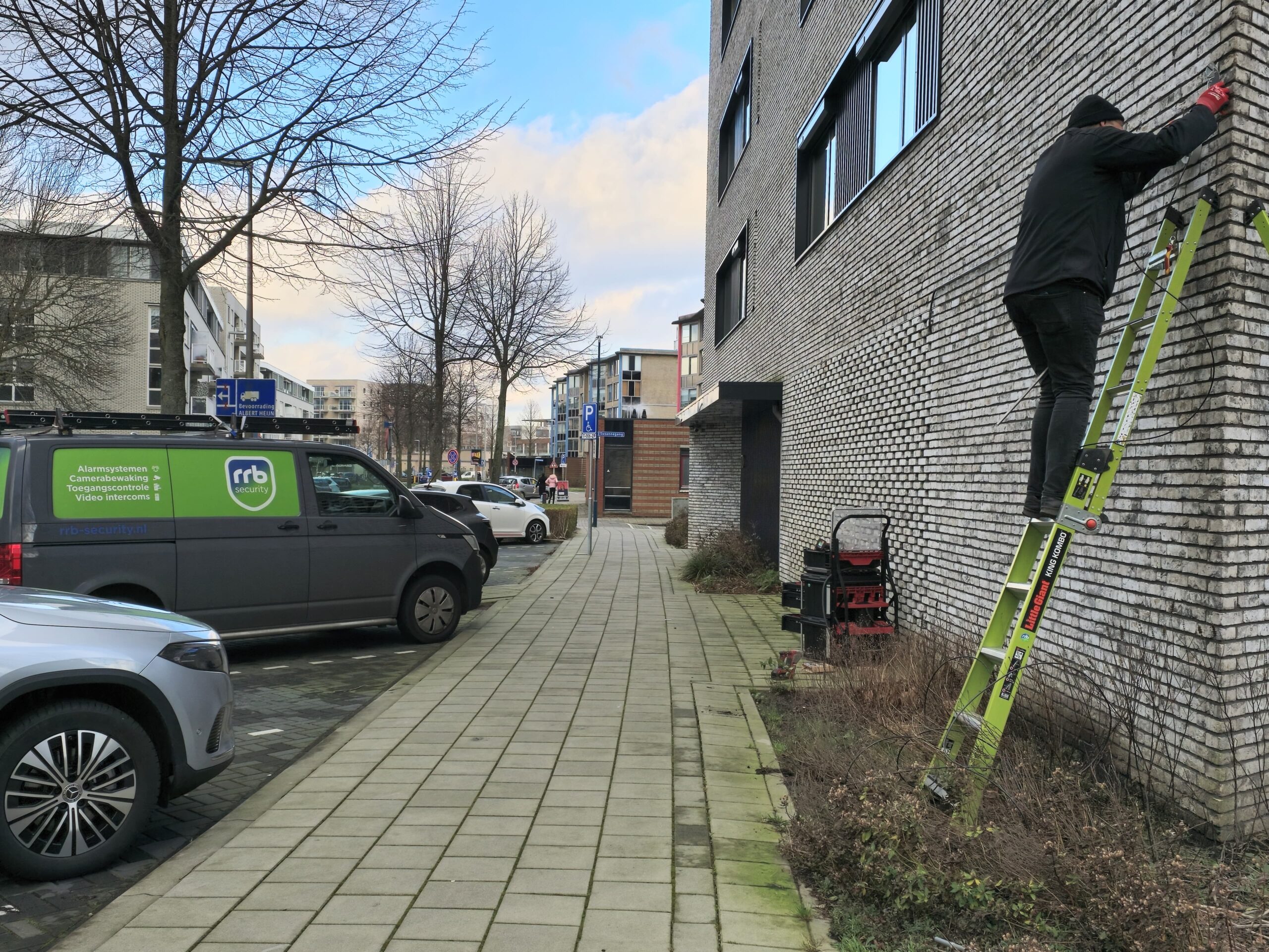
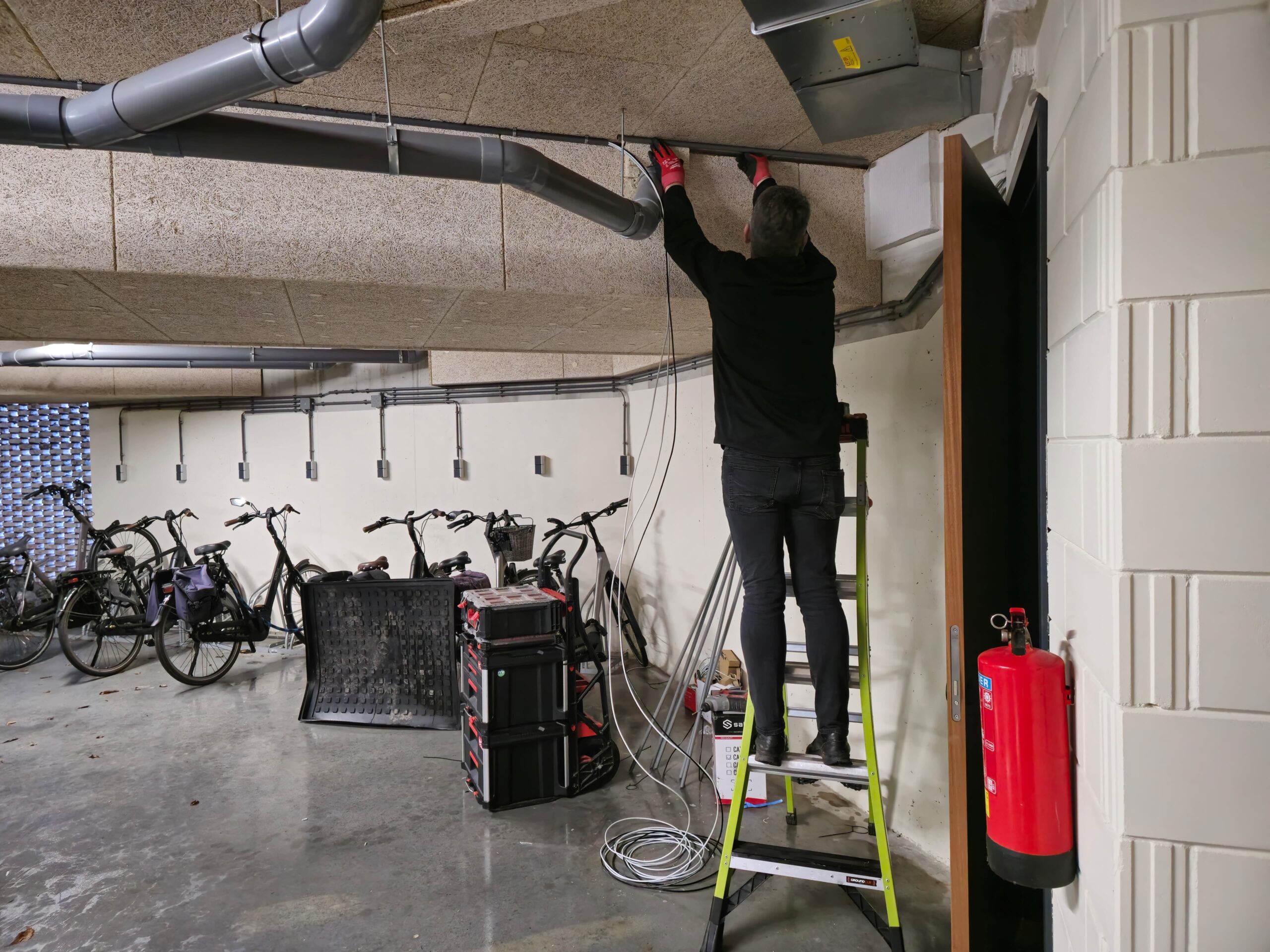
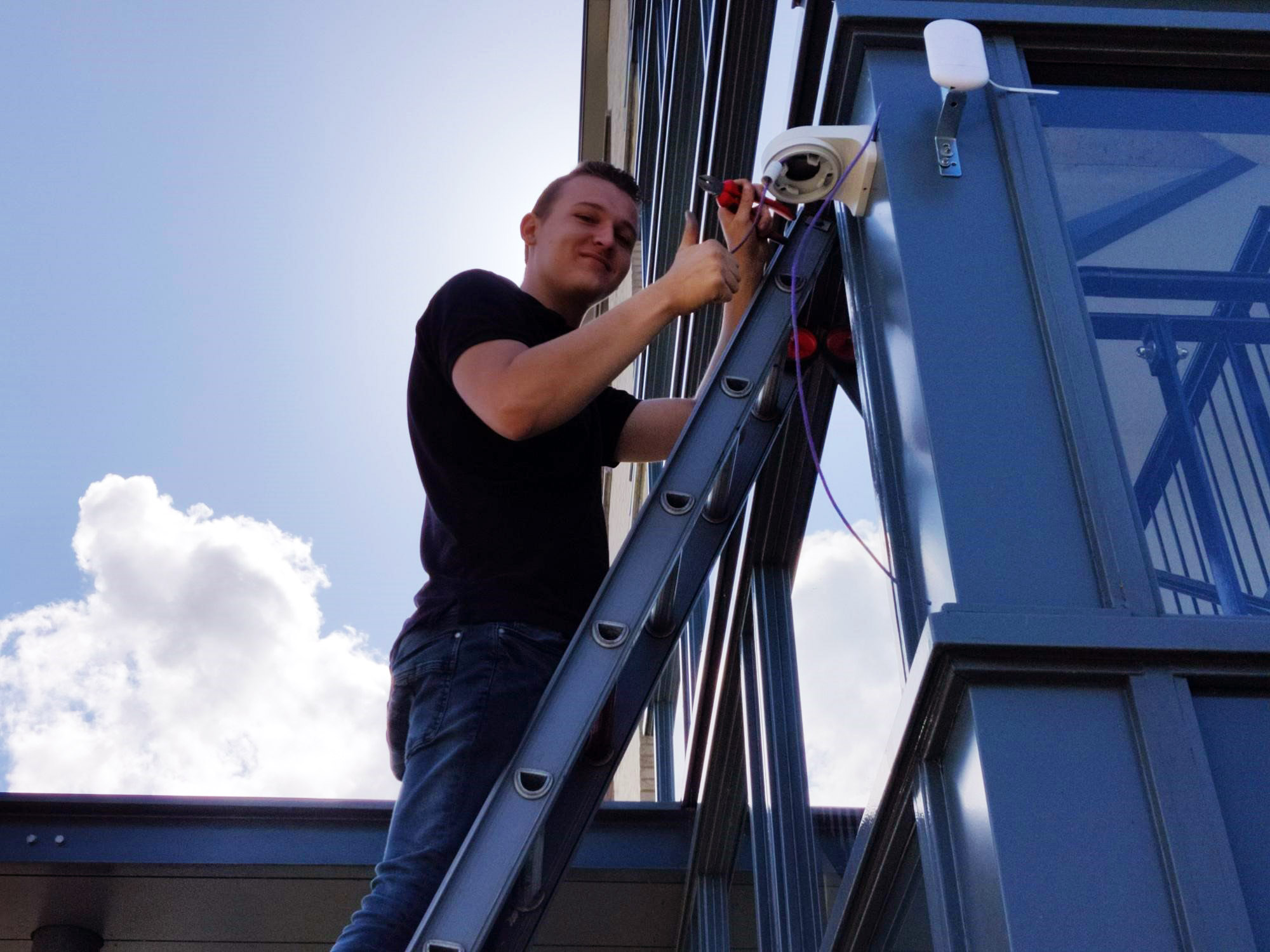
Complete camera installation by our professionals
With decades of experience and passion, we are happy to provide a no-obligation quote and suitable advice for your situation.
Request a free, tailor-made on-site quote for the complete installation of a CCTV system.
Tailor-made CCTV for VvEs
One point of contact for all your security and accessories
- Specialised in CCTV for VvEs
- No-obligation on-site quote
- Emphasis on professional installation
- Tailor-made solutions
- Leading-brand products only
- Mobile 5G solutions
- Service plans for maintenance and support
- Advice on privacy
- Advice on regulations
- Innovative solutions for surveillance in lifts
- Short lines of communication and a fixed contact person
- Open quotes and service plans
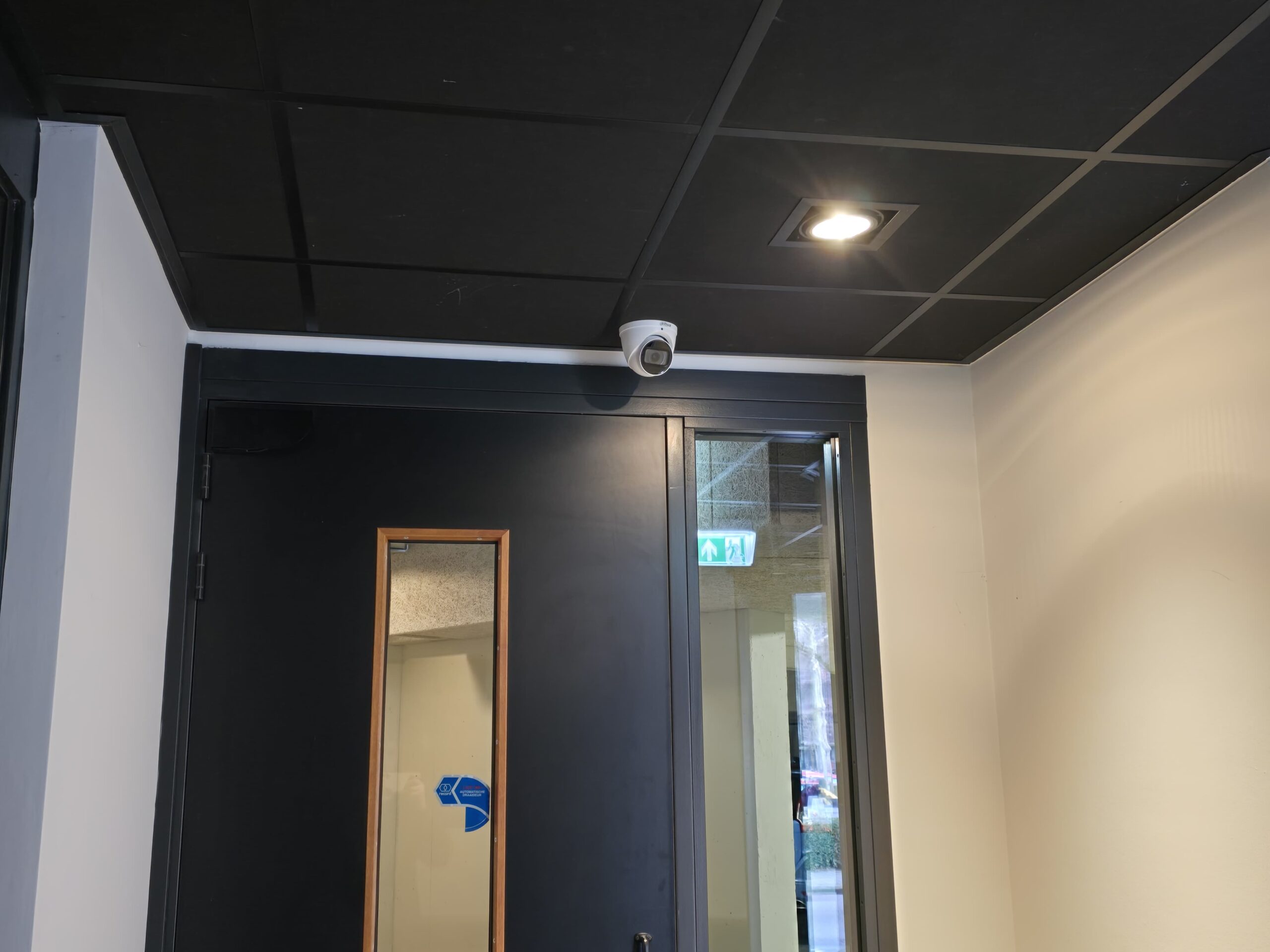
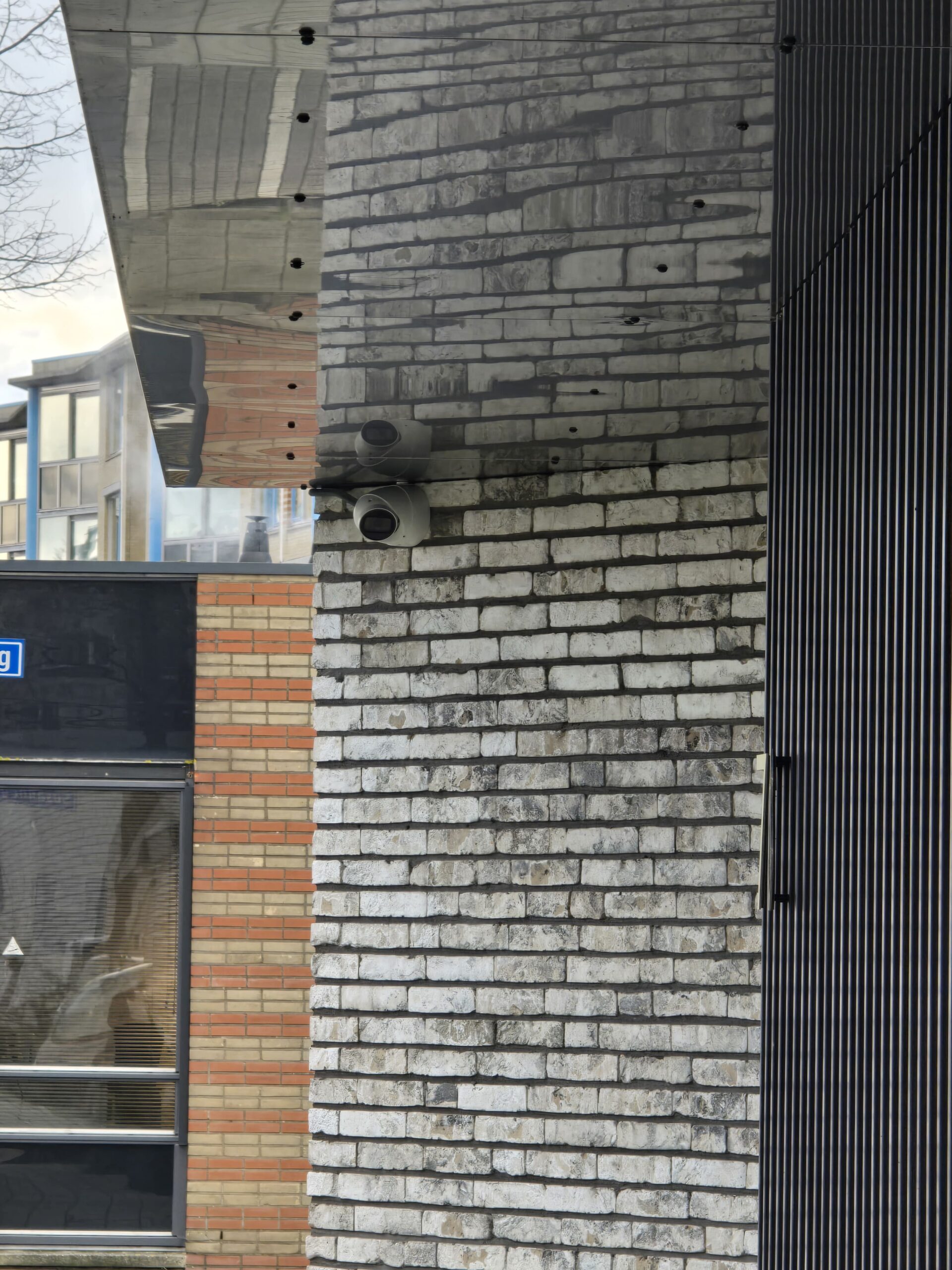
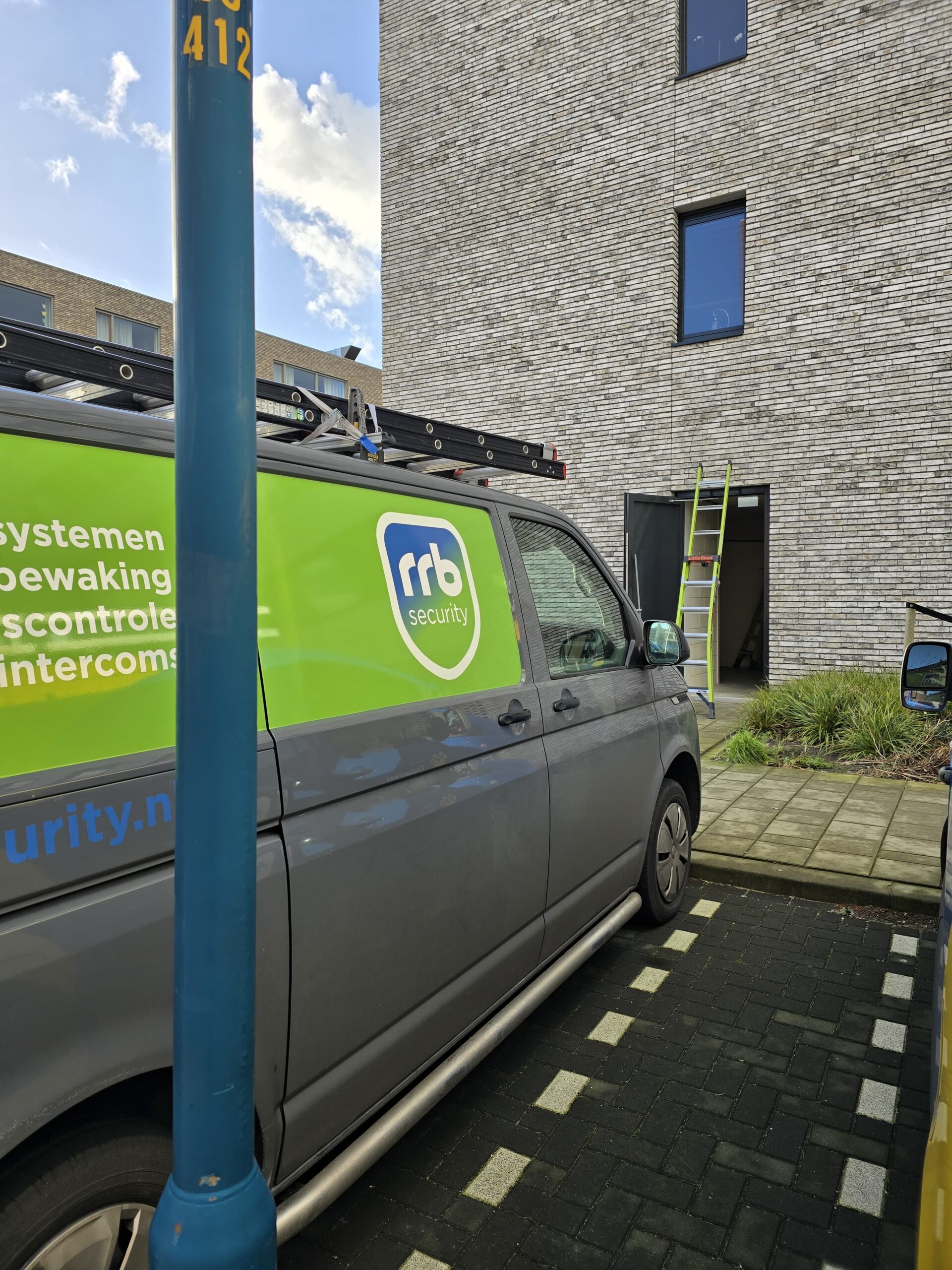
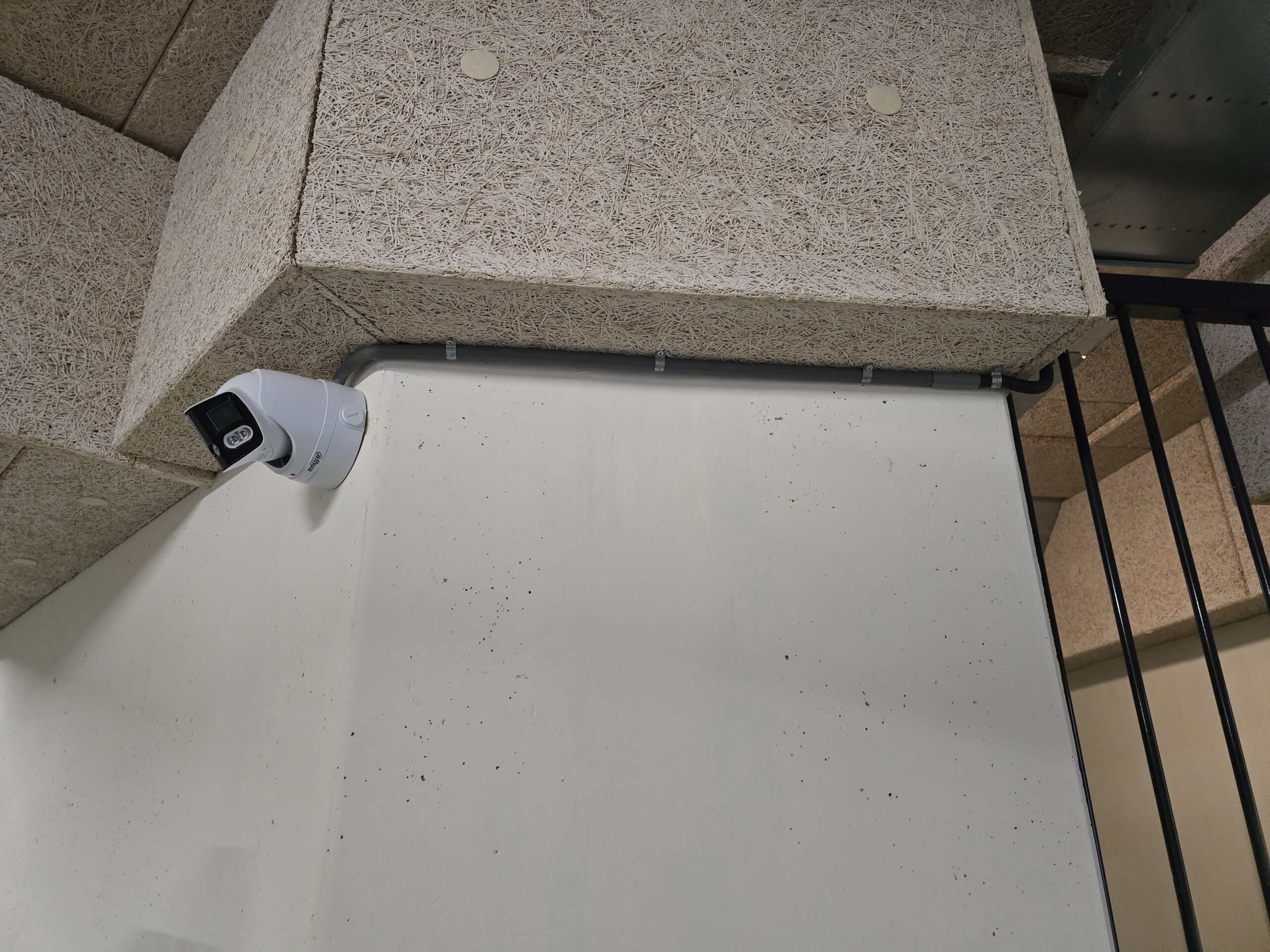
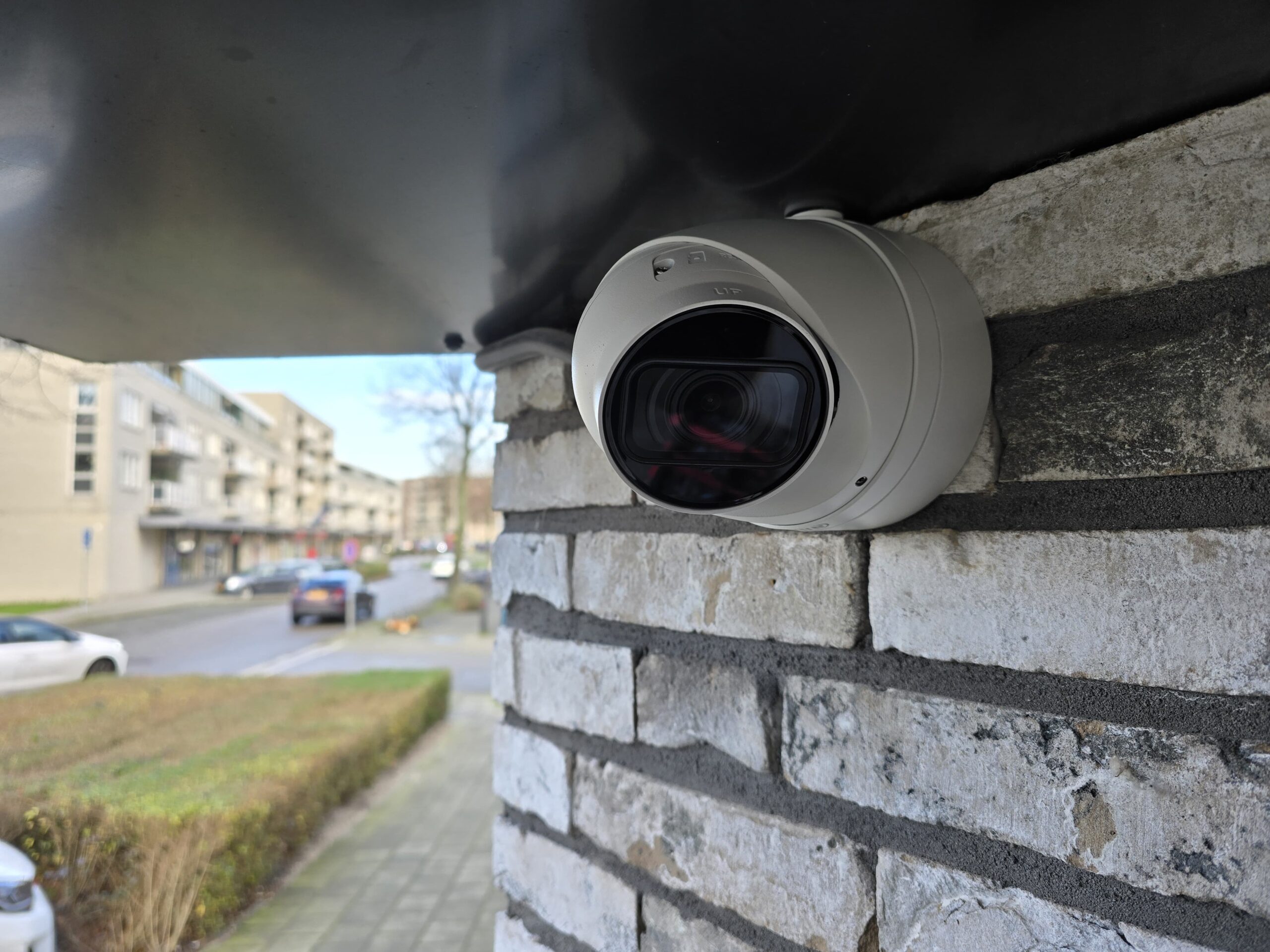
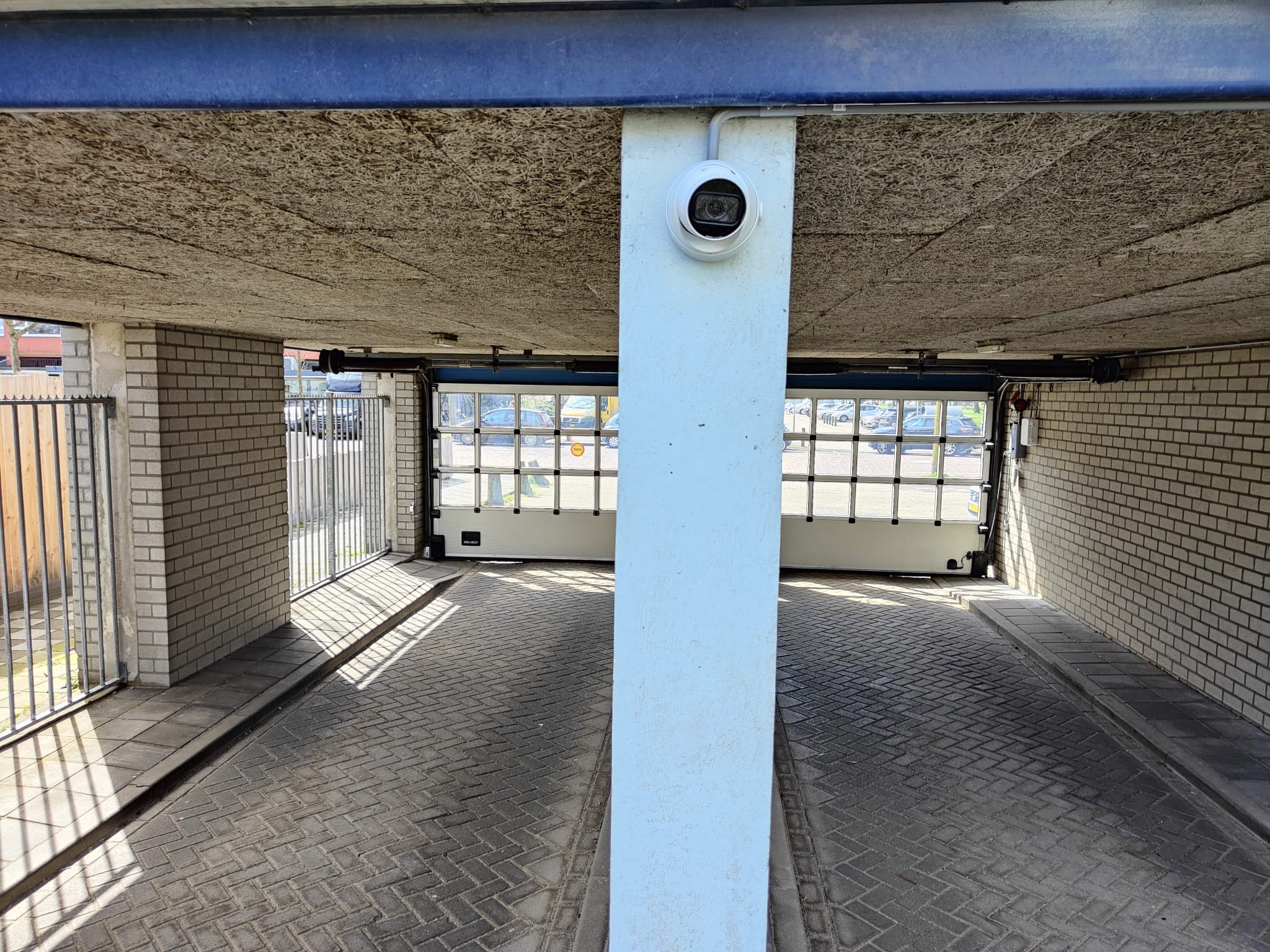
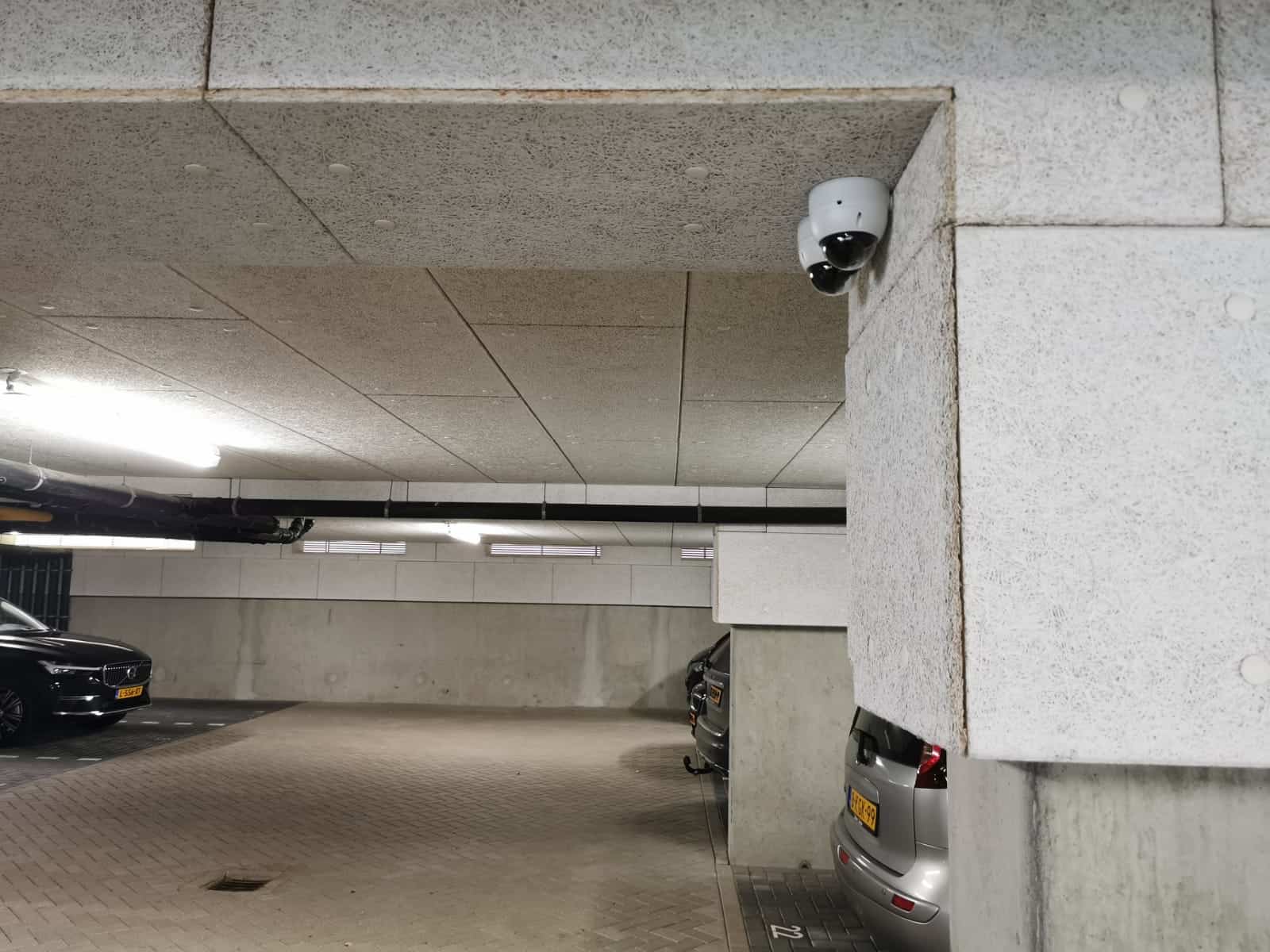
Future-proof CCTV for your VvE
Technology is developing fast. Pay attention to these ten points when choosing, and the system will remain usable for years.
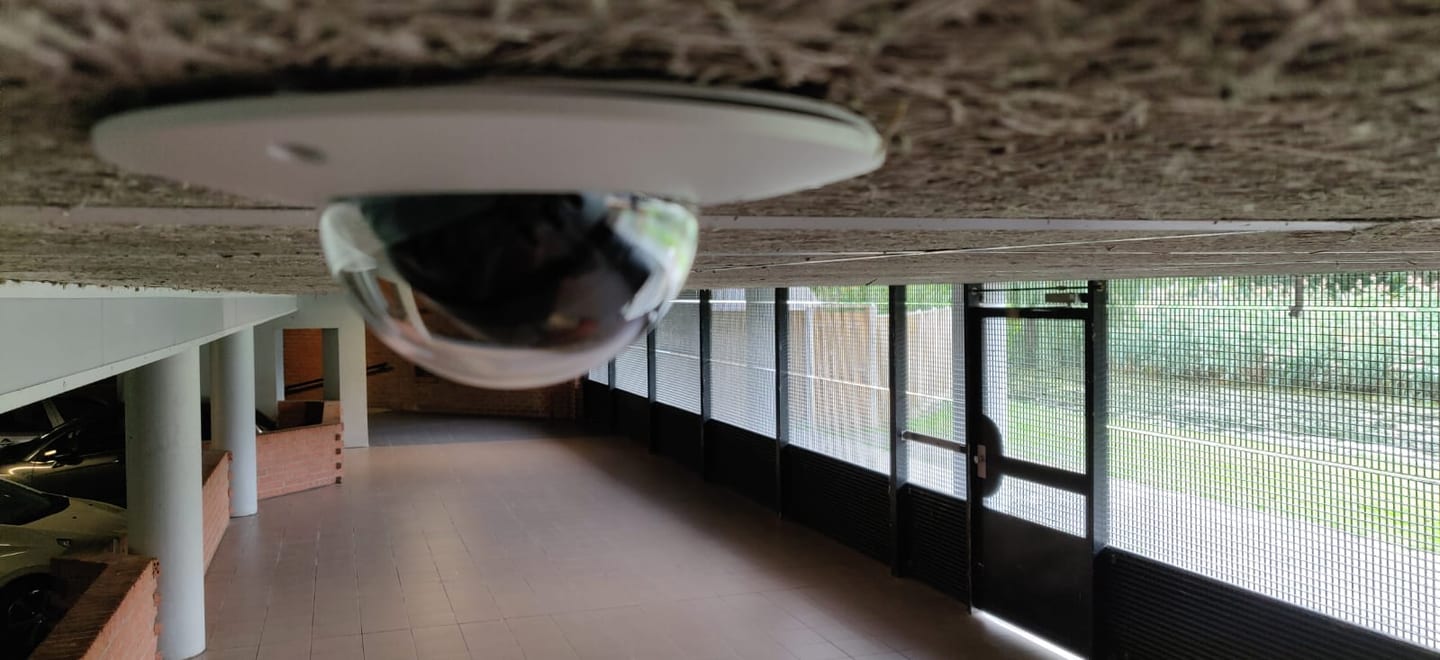
More on future-proofing and innovation in CCTV for VvEs
Camera security technology is developing at lightning speed. By taking future innovations into account now, a VvE can choose a CCTV system that stays effective for years and is easy to upgrade. Below are ten important developments and trends that contribute to a future-proof CCTV system.
Field of view of security cameras
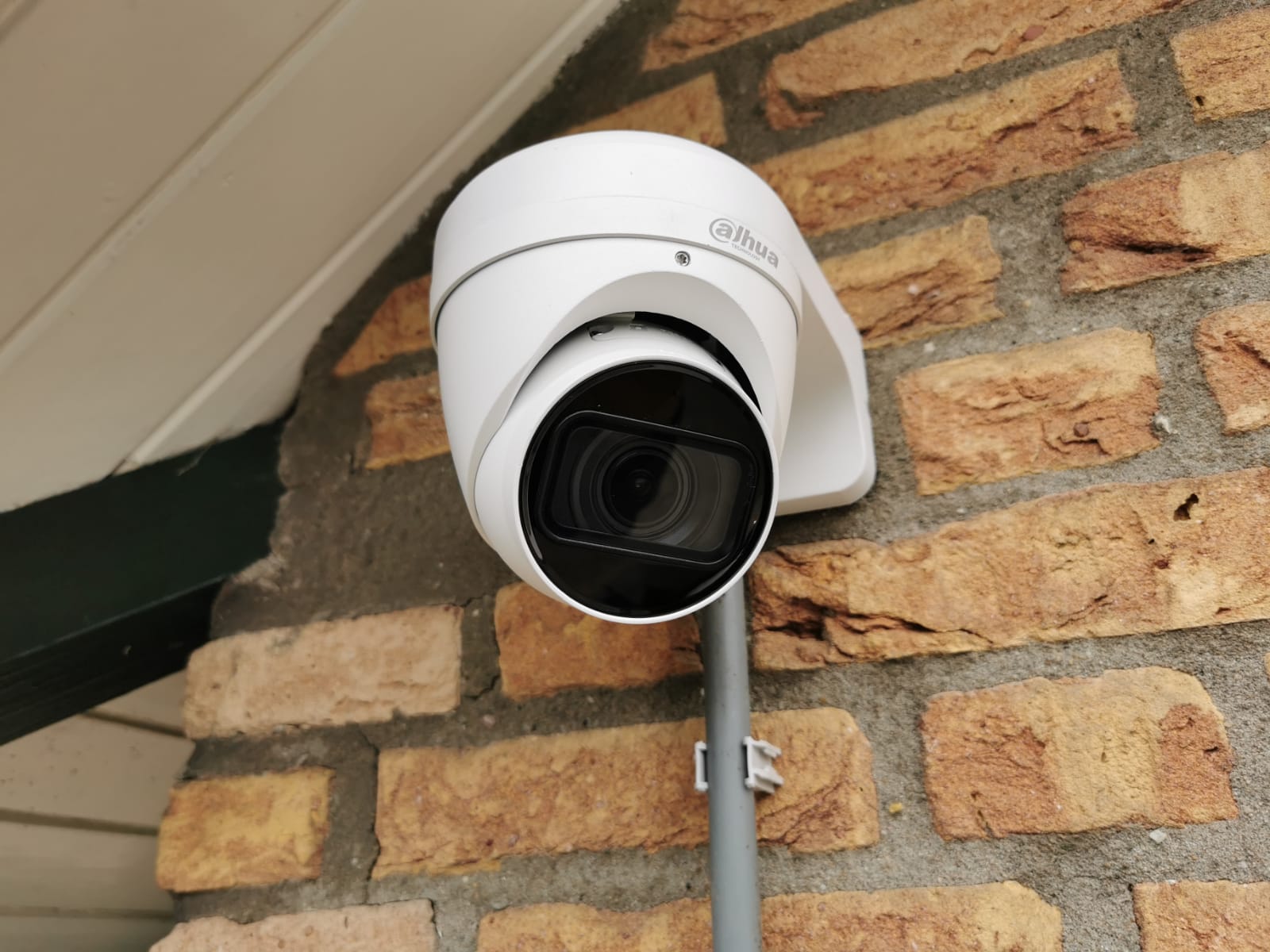
Depending on the areas to be secured, cameras with a wide field of view are sometimes necessary to capture the situation properly. Most cameras have a 2.8 mm lens (roughly 110 degrees field of view) or a 3.6 mm lens (roughly 90 degrees field of view).
If the camera has a varifocal lens, the image can also be zoomed in for more detail. Cameras with a 180-degree view are also common nowadays. These cameras have 2 lenses of 90 degrees.
The images are merged by software, creating one large overview. This saves installation work, materials, licences and maintenance costs, because fewer security cameras are needed in total. It may also allow a small recorder to be used, because fewer recording channels are needed.
Weather resistance and durability
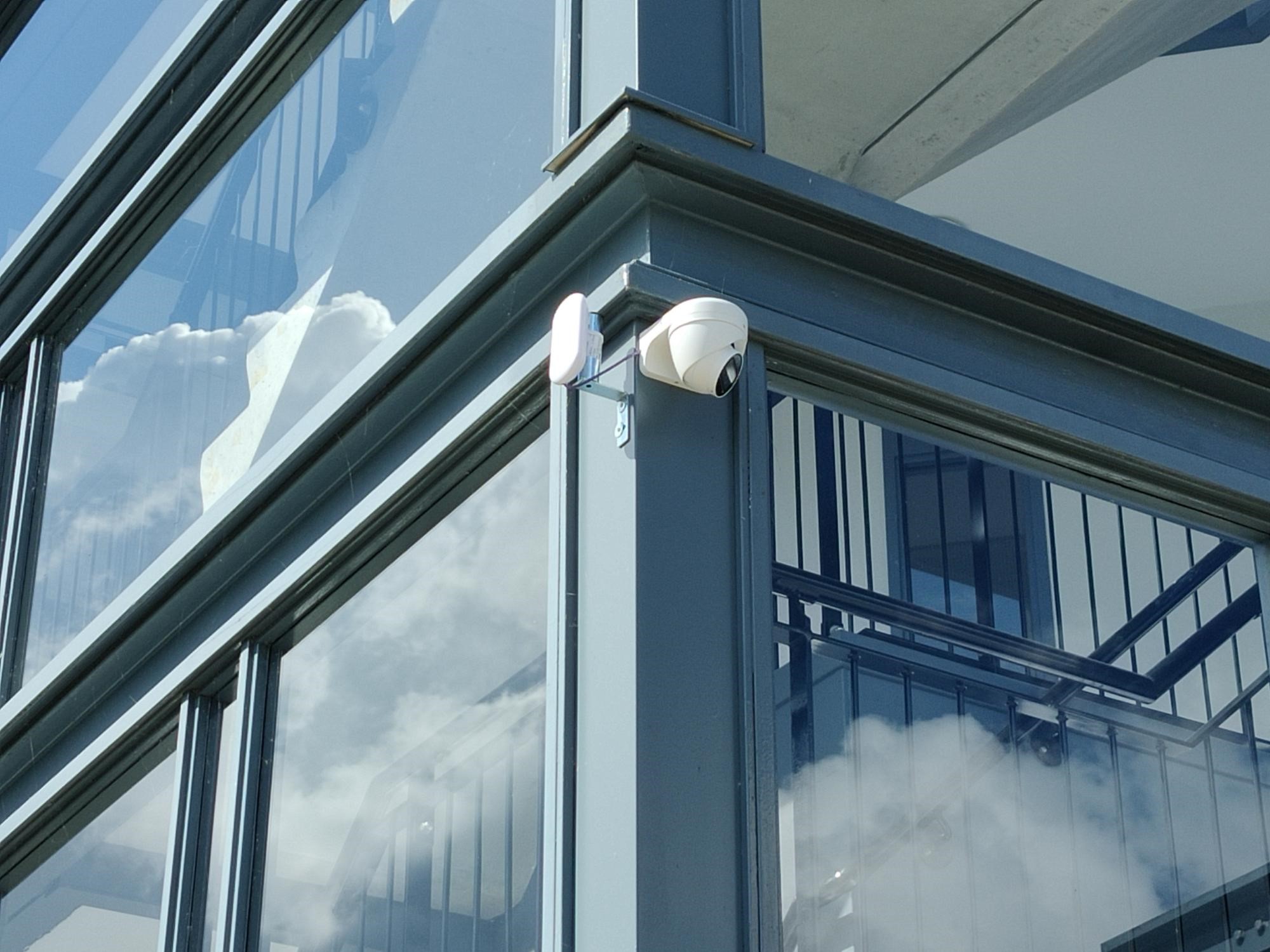
For outdoor installations, it is essential to choose cameras with a high IP rating (for example IP65 to IP67), so that they withstand rain, wind and dust. Security cameras mounted outdoors are simply more prone to defects caused by the weather. That is why choosing the right type of camera and build quality is so important.
Resolution and image quality
A high resolution gives sharp, clear images, which is crucial for recognising people and vehicles. Most modern CCTV systems offer resolutions from Full HD (1080p) to 4K, which is especially useful for larger sites or detailed recordings.
In a small hall, Full HD resolution will probably serve you perfectly well. However, price differences between cameras are now becoming so small that there is sometimes only a few tens of euros between a Full HD and a 4K camera. For future-proofing and because of the small price difference, many VvEs quickly opt for the higher-resolution solutions.
Night vision and infrared technology
Many of the incidents at VvEs happen at night or in the evening. That is why it is important that the cameras have infrared (IR). This allows them to see up to about 40 metres at night.
Facial and number plate recognition
Modern systems can recognise faces and number plates. This can be useful for access control or for automatically registering suspicious persons, provided this happens within the legal limits of the GDPR.
Cloud storage and decentralised data storage
More and more VvEs choose cloud-based storage instead of local servers or hard drives. Cloud storage offers advantages such as remote access, automatic backups and scalability without physical limits. A fast internet connection is always required for this, though.
5G and fast network connections
With the rise of 5G and improved fibre networks, camera footage can be streamed in higher quality and without delays. This is especially useful for VvEs that want to monitor remotely via a secure app or web portal. Because data bundles keep getting larger, the cost of this falls considerably every year.
Wireless or wired CCTV system
For VvEs, the standard is a wired CCTV system. This is because wireless causes too many faults and is considerably less reliable than a wired CCTV system based on UTP cabling and Power over Ethernet.
Cyber security and encrypted connections
A future-proof CCTV system preferably has proven end-to-end encryption, two-factor authentication and regular firmware updates. This minimises the risk of hacks and keeps data protected in line with the law.
AI and advanced video analytics
Artificial intelligence (AI) is increasingly being integrated into CCTV systems. With AI, cameras can analyse movement (video content analytics) and distinguish between people, vehicles and animals.
This reduces unnecessary notifications and makes the CCTV system more effective. It is also increasingly possible to teach the system to recognise other objects by supplying images, without any programming knowledge.
Points to consider for your VvE
Budget, purchase and maintenance: other important aspects when implementing CCTV
Budgeting
Drawing up a sound budget for installing CCTV within a VvE is crucial to avoid financial surprises. Both the initial and the ongoing costs need to be mapped out. Initial costs include buying cameras and recording equipment, installation costs, and laying the necessary infrastructure such as cabling, power supply and internet connections.
It is also important to take into account the costs of setting up a service contract or maintenance plan. Future extensions or upgrades can also affect the total budget. Comparing quotes from different suppliers helps you get the best value for money.
It is also wise to keep a reserve budget for unforeseen expenses, such as faults or replacing defective parts. By making a clear overview of all cost items and financial obligations, the VvE can make decisions transparently and responsibly. This keeps everyone involved well informed and keeps the project financially feasible in both the short and the long term.
Buying CCTV
Buying an effective and future-oriented CCTV system calls for a well-considered choice, based on the specific needs of the VvE. First of all, it is important to clearly define the objectives of the system: is it mainly about safety, protection of property or both?
Next, look at the different technologies, such as NVR or VMS systems, each with their own pros and cons in terms of image quality, storage options and management features. A thorough market analysis helps when comparing various suppliers and systems.
Not only the purchase price matters here, but also factors such as warranty, support and the system's scalability. Ease of use and the manufacturer's origin can also have a major influence on support and usability in the long term.
Periodic maintenance
Regular, periodic maintenance is essential for a CCTV system within a VvE to work optimally. By scheduling maintenance at fixed times, faults and technical problems can be spotted and fixed in good time, safeguarding the reliability and security of the system.
This maintenance covers not only checking hardware such as cameras and storage equipment, but also software updates and security patches. Taking out a maintenance contract with a specialist service provider can take away a lot of worry, because this party carries out periodic checks and acts quickly in the event of defects.
A good maintenance plan also helps anticipate technological ageing, so that upgrades can be made in good time to meet new requirements and security standards. Keeping a maintenance log regularly gives insight into the performance and stability of the system, and at the same time provides reliable documentation for any audits or legal questions.
What to look out for
When choosing a CCTV system, there are various aspects the VvE should consider to make a well-considered and lasting investment. First of all, it is essential that the system complies with current privacy law, including the GDPR, and that a clear privacy policy has been drawn up.
Ease of use and accessibility of the system also play a major role; the system must be easy to operate for the managers and, where relevant, connect to existing security software.
It is also important to consider image quality, storage capacity and scalability, so that future extensions can be carried out easily. Installation and maintenance costs are an essential part of the evaluation, as are the availability of technical support and the warranty terms.
It is also advisable to check whether the system offers integration with other security measures, such as alarm systems or access control. By weighing these factors carefully, the VvE can choose a system that is both secure and future-proof, and that meets the specific needs of the community.
Legal basis and decision-making for the VvE
Below you will find the legal basis, privacy law, decision-making, rules and other requirements for the VvE.
The legal balance: protecting property versus privacy
Installing cameras creates a tension between protecting property and safeguarding the privacy of residents and visitors. On the one hand, the aim of CCTV is to prevent burglary, vandalism and other unwanted situations.
On the other hand, the rights of individuals must not be violated. This balance requires careful consideration, taking into account both the need for security and privacy law.
The GDPR and the processing of personal data
Since the GDPR (25 May 2018), CCTV no longer needs to be reported to the Dutch Data Protection Authority (Autoriteit Persoonsgegevens). The VvE must, however, meet these conditions:
- Limited processing: only data such as the time, date and location of the recording may be recorded.
- Purpose limitation: the footage may be used exclusively for security purposes and as evidence in any incidents.
- Limited access: the recorded data may only be viewed by those responsible for the building, for example the VvE board or the property manager.
- Retention period: footage must be deleted no later than 4 weeks after recording, or after an incident has been dealt with, so that long-term storage and the associated privacy risks are limited.
- Transparency: it must be clear to everyone that CCTV is in use. This is usually done with visible warning signs and information in the VvE's communication plan.
Decision-making within the VvE and relevant articles of the 1973 model regulations
Installing cameras requires a formal decision by the owners' association (VvE). The provisions of the Model Regulations 1973 (Modelreglement 1973) play an important role here. The following articles show what is legally expected of a decision:
Article 37 of the Model Regulations 1973: Article 37 deals with the powers of the VvE and stipulates that decisions on changes to common parts, such as the installation of cameras, must be taken by a qualified majority. In this context, it is important that the proposal for CCTV is clearly described and that its objectives (for example safety and prevention of vandalism) are substantiated.
Article 38 of the Model Regulations 1973: Article 38 covers decision-making on specific changes to the common parts. It stresses that far-reaching changes, such as installing CCTV, cannot be carried out without a careful decision.
This decision must meet the requirements of transparency and due care, so that all owners involved are aware of the consequences for their privacy and safety.
In addition, the full Model Regulations 1973 provide a framework within which VvEs can draw up their own rules, provided these do not conflict with national law. This gives every VvE the flexibility to reach a decision through consultation that does justice to both the need for security and the protection of privacy.
In summary: conditions for CCTV in a VvE
Installing a camera in a building is therefore permitted, provided the following conditions are met:
- Compliance with the GDPR: handle the recorded personal data with care through clear purpose limitation, limited storage and controlled access.
- Transparency towards residents and guests: inform everyone involved in advance that CCTV is in use, for example through warning signs and letters to residents.
- Legal decision-making within the VvE: installing cameras requires a formal decision by the VvE. Under Articles 37 and 38 of the Model Regulations 1973, this decision must be taken by a qualified majority and the proposal must be carefully substantiated.
- Professional execution: choose a reliable and experienced party that not only installs, but also helps draw up the necessary protocols and guides the decision-making.
Example protocols for CCTV at a VvE
It is important that you, as a VvE, lay down a camera protocol. Below are two example CCTV protocols for VvEs.
Example 1: CCTV protocol VvE 1
1. Introduction: During the general board and members' meetings, the installation of CCTV was discussed. This followed the vote on installing CCTV, in which a majority of the members agreed with the proposal.
For this purpose, a protocol has been drawn up to inform the residents and members of the owners' association how the CCTV system is used and when it is used.
2. Reasons for installing CCTV
As managers of the association, an important objective is general safety and certainly also the sense of safety among residents. By applying various security measures, we hope to increase this. CCTV will be used for reasons including the following:
- Protecting property and common assets
- Limiting nuisance, vandalism and damage as far as possible
- Preventing/minimising fly-tipping
- Preventing/minimising crime
- Supporting criminal and civil proceedings
3. Privacy and legislation: The CCTV system is operational 24/7 and records footage based on motion. The security cameras are in the common areas of the VvE complex. No homes or other people's property are filmed.
The camera footage is stored in a central location that is only accessible to the designated person. The board and the management will handle this camera footage with the utmost care. The footage can and may only be viewed in compliance with strict rules.
The GDPR (General Data Protection Regulation) protects residents' privacy by setting requirements for stored footage. Camera footage may not be kept for longer than necessary; the Dutch Data Protection Authority (Autoriteit Persoonsgegevens) uses a maximum of 4 weeks as a guideline.
If an incident has occurred, the owners' association may keep the footage of that specific incident until it has been dealt with. This protocol is made available to all residents and members via the website of the VvE's property manager.
4. Procedures: The camera footage can only be viewed and secured in the following cases
- When a breach of the house rules is found
- When a criminal offence has taken place
Those authorised to operate the camera footage are the VvE board members, the VvE's property manager and the technical installer of the CCTV system. However, only the VvE's property manager and board members are authorised to view the camera footage.
The technical installer can, however, support the VvE in viewing it. Everyone who has been filmed and appears in the footage has the right to view this camera footage. The CCTV system is kept in a locked room of the VvE.
The camera footage can only be viewed by the property manager and the board using a username and password. This prevents third parties from also being able to view the footage.
5. Complaints
If there is a complaint about the CCTV system or how it works, it can be submitted to the VvE board. If the VvE board and the resident cannot find a solution that suits both parties through consultation, the complaint can be submitted to the Dutch Data Protection Authority (Autoriteit Persoonsgegevens).
Example 2: CCTV protocol VvE 2
1. Introduction and definitions: **** uses CCTV on its premises. As a result, personal data is processed. Through this CCTV Protocol (hereinafter the "Protocol"), XXX provides information on the implementation of the CCTV installed at XXX, in XXX. It also explains the method of storage, duration, purpose and processing. The definitions used in the Protocol are set out below.
GDPR: Regulation (EU) 2016/679 of the European Parliament and of the Council of 27 April 2016 on the protection of natural persons with regard to the processing of personal data and on the free movement of such data, and repealing Directive 95/46/EC (General Data Protection Regulation)
AP: Autoriteit Persoonsgegevens (Dutch Data Protection Authority)
Protocol: this document
2. Information on CCTV: A. Contact details of the responsible department: For questions about the Protocol, **** can be reached on phone number xxx xxx xxx. You can also get in touch by email at xxx@uwvve.nl
3. Areas under CCTV: CCTV is used at various places on the outdoor site. At the access roads to the site, stickers and/or signs make it clear that security camera recordings are being made on the site. An overview of the locations where CCTV is in use:
Access roads (main entrance, suppliers' entrance), main building roof, outdoor storage, car parks
4. Purposes: CCTV serves various purposes. Besides general safety, the system also serves the following:
Protecting property and common assets. Limiting nuisance, vandalism and damage as far as possible. Preventing/minimising crime. Supporting legal proceedings
5. Personal data: Camera footage is not linked to any form of personal data, such as first names and surnames, number plates, access cards, government documents, physical characteristics or any other form of personal identification.
6. Viewing camera footage: Camera footage is only viewed in the event of: a crime or criminal offence, theft, damage and/or vandalism.
7. Retention period for camera footage: The recorded camera footage is kept for 28 days. After this retention period, the footage is deleted automatically.
If an incident has occurred for which camera footage has been exported, it may be kept until a court ruling has become final and irrevocable. The footage concerned will then be deleted. The camera footage is stored encrypted locally on site.
8. Authority to view camera footage: Authority over the CCTV system, and with it access to the camera footage, is kept to a minimum. The camera footage may be viewed when there is reason to do so, as described in chapter 2. All actions, such as viewing, controlling, exporting, playing back, opening and recording camera footage, are kept for 30 days as standard.
This "audit logging" shows which user exercised his or her rights within the CCTV system, in what way and at what time.
9. Disclosure of camera footage to third parties: XXX may provide camera footage to (investigative) authorities when XXX is obliged to do so on the basis of a legal requirement or court ruling. The camera footage is not shared with third parties for commercial or other purposes.
10. Legal basis for CCTV: The processing of personal data involved in the CCTV is necessary for the purposes of the legitimate interests of XXX, its staff and visitors (Article 6(1)(f) GDPR). In implementing the Protocol, XXX has taken the privacy and interests of everyone involved into account as far as possible.
One example of this is that CCTV is only used at the most necessary locations (access roads, car park, accessible outdoor storage). The policy rules are in line with the guidelines of the Dutch Data Protection Authority (Autoriteit Persoonsgegevens).
11. Rights of data subjects: Under the General Data Protection Regulation (GDPR), data subjects in camera footage have the right to ask XXX for access (Article 15 GDPR) and for erasure of camera footage (Article 17 GDPR) in which the data subject has been recorded. More information about this can be found on the website of the Dutch Data Protection Authority.
If a data subject wishes to exercise these rights, they should get in touch via the designated department (see 2A).
12. Changes to the protocol: The protocol may be changed. We therefore recommend consulting this protocol regularly if you have questions. The current version was last updated on XXX 202().
Why RRB Security as your camera security installer?
There are many different security companies that focus on installing CCTV. Few, however, specialise in VvE CCTV. Our deep-rooted knowledge of CCTV and technical security is what makes the difference.
We deliver tailor-made solutions designed especially for owners' associations.
Besides our security engineers, our team includes IT specialists, metalworkers and systems specialists. Together they make sure our camera security systems work optimally.
Frequently asked questions
Frequently asked questions about installing CCTV at a VvE
Can't find your question? Our specialists are happy to help with advice that fits your situation.
Can we view the camera footage remotely?
Yes, through the AJAX app or the CCTV system software. Only users added by the board get access. Without a fixed internet connection, this can be done via 5G.
What is a legitimate interest for CCTV by a VvE?
A legitimate interest means that the VvE has a valid reason to install cameras, such as protecting property or the safety of residents.
Is it mandatory to inform residents about installed security cameras?
Yes, the VvE is obliged to inform residents and visitors about the presence of CCTV, for example by putting up clear signs.
May a VvE film the public road with security cameras?
In principle, no. Cameras may not film the public road unless this is unavoidable in order to protect property and residents.
How long may camera footage be kept?
Camera footage may not be kept for longer than necessary, with a guideline of four weeks at most. In the event of incidents, footage may be kept longer until the matter has been dealt with.
Must a VvE carry out a privacy assessment before installing cameras?
Yes, the VvE must carry out a privacy assessment that weighs the interests of residents and visitors against the VvE's own interest.
What are the consequences if a VvE does not comply with the GDPR when using CCTV?
Failure to comply with the GDPR can lead to legal consequences and fines for the VvE.
Is the consent of all residents needed to install cameras?
No. A decision by the general meeting of owners is enough. The deed of division (splitsingsakte) and the regulations determine which majority is required.
May a VvE install cameras in residents' private spaces?
No, cameras may not film inside residents' homes. Only common areas qualify.
Who is responsible for managing the camera footage within the VvE?
The VvE is responsible for managing the camera footage and must ensure adequate security and limited, authorised access to the CCTV system.
Must a VvE draw up a CCTV protocol?
Yes, that is strongly recommended. The protocol sets out the purpose, who may view the footage and the retention period.
May a VvE share camera footage with third parties?
Footage may only be shared if required by law, in the event of an incident (in line with the camera protocol), or for example when the police demand it.
What does it cost to install a CCTV system in a VvE?
Costs vary by system. An entry-level solution can be affordable, depending on size and quality.
Are there monthly costs for a CCTV system?
Not always. With full ownership there are no fixed costs, but maintenance and software updates can be arranged separately.
What are the rights of residents with regard to CCTV?
Residents have the right of access and to an explanation of the processing, and may object if they believe they are being filmed unjustly and this affects their privacy.
May a VvE install cameras without consulting residents?
No, consultation and approval through the general meeting of owners is mandatory.
How should a VvE inform residents about installed cameras?
Through signs, newsletters or letters to residents stating the purpose, the retention period and who manages the footage.
May a VvE install cameras in lifts and car parks?
Yes, provided they are common areas and there is a legitimate interest.
What must a VvE do in the event of a camera footage data breach?
The VvE must report the data breach to the Dutch Data Protection Authority within 72 hours, unless the breach is unlikely to pose a risk to residents.
Free quote and GDPR advice for your VvE
We are happy to visit you on site with no obligation and advise you and the members' committee on the use of CCTV. We help you set up a protocol.
Periodic maintenance and support
We offer (optional) service plans for maintaining the systems we supply. When an internet connection is available, we can also check automatically and periodically whether the system is still working properly.
Where can I find more frequently asked questions?
View more frequently asked questions about how we work, our quotes and costs.