
Facial recognition camera
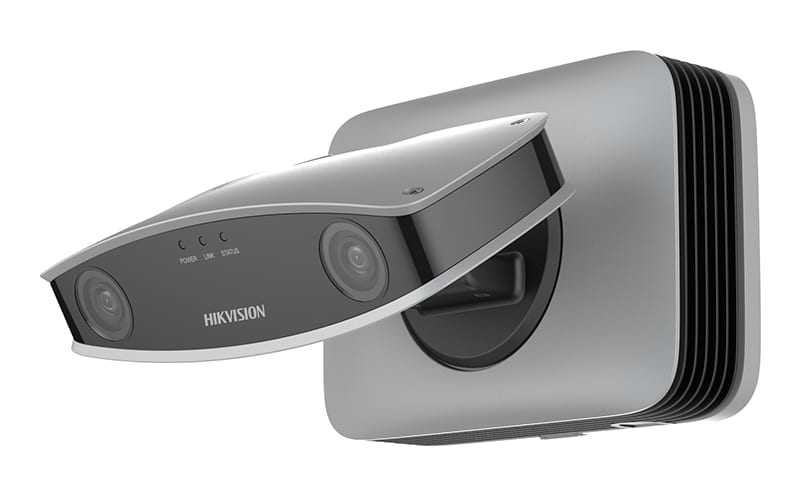
Facial recognition in the Netherlands
This solution is also gaining ground in the Netherlands. As costs fall, facial recognition is becoming increasingly attractive for smaller organisations too, such as jewellers or call centres. It can be used, for example, to give employees automatic access to buildings or to register visitors.
A jeweller, for example, can set up an airlock entrance where the person stands while their face is scanned; if they appear on a blacklist, access can be refused based on a match in a database. Supermarkets also already use facial recognition to send previously caught shoplifters out of the shop when the facial recognition camera recognises their face.
Free advice and a fresh look at your situation
RRB Security operates nationwide, installing and managing camera solutions. Do you need a tailor-made solution? We will help you make it happen for your organisation.
Security does not always have to be a cost; in many situations, a properly working CCTV system can actually earn you money. For example, through fewer security guards, smart applications that take over human tasks or prevent human error, or by recovering costs. We are more than happy to think along with you and help you with your security questions.
But what about the GDPR (AVG in Dutch) and privacy law?
Facial recognition software is becoming more common. At the same time, there is a lot of opposition to this kind of solution.
Facial recognition works with biometric data. Under the GDPR (AVG in Dutch), that is special category personal data: its use is only permitted in exceptional cases, for example when it is necessary for security, and requires a DPIA beforehand. We advise you on what is permitted in your situation.
When a person on the blacklist is seen by the facial recognition camera again, it generates an alert. In a video management system such as Milestone or Genetec, this can then be linked to a push notification or email alert. This allows a fast and appropriate response.
Different names
Identifying a person with a security camera is known by several different terms
- Bio surveillance
- Human recognition
- Person recognition
- Facial recognition / face recognition
However, there is a difference between person recognition and facial recognition
Person recognition
The camera system can distinguish between, for example, a car and a person. It does not recognise a face, but it does recognise the appearance of a human shape. Many cameras today can detect this themselves without separate software.
Facial recognition
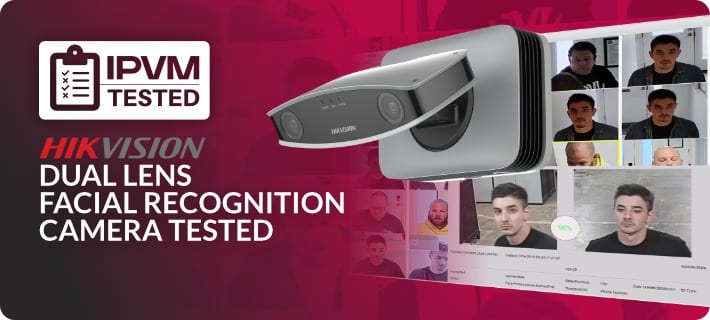
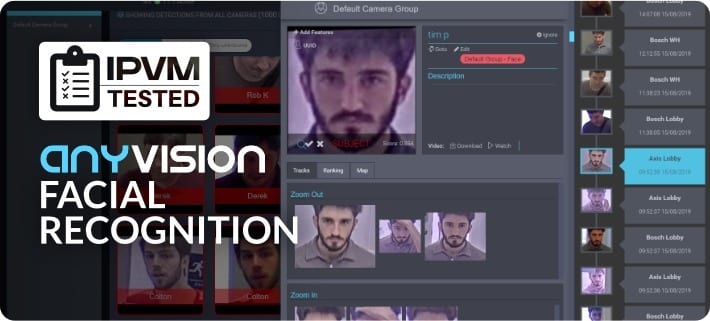
The camera system can recognise a face. This means, for example, that several cameras can be linked so that a person can be followed. This data is stored and managed by a solution such as Herta Security, which can be combined with VMS solutions such as Milestone.
Frequently asked questions
Frequently asked questions
Can't find your question? Our specialists are happy to help with advice that fits your situation.
Where is facial recognition already used?
At airports, on public transport, in stadiums, shopping centres and supermarkets. Increasingly also at smaller organisations, such as jewellers and call centres.
What can I do with it?
You can give employees automatic access to buildings, register visitors, or refuse access if someone is on a blacklist, for example at an airlock entrance at a jeweller's.
What about privacy and the GDPR?
Facial recognition processes biometric data; under the GDPR (AVG in Dutch), that is special category personal data. It may only be used in exceptional cases, such as necessary security, and after a DPIA. If someone is on a blacklist, recognition is used to refuse access.
Is facial recognition also suitable for smaller organisations?
Yes. As costs fall, it is becoming attractive for smaller organisations too.
Where can I find more frequently asked questions?
See more frequently asked questions about how we work, quotes and costs.