Access control for organisations
Access control system installation in the Netherlands for your organisation
An access control system is essential for any organisation where employees or visitors need access to a building or site. Organisations with a changing workforce or valuable goods benefit from insight into every access event and from access rights that are easy to change. RRB Security handles access control system installation in the Netherlands, from on-site advice to managing access rights.
Security specialist since 1995
31years of experience
- 1995Active since
- PaxtonCertified installer
- SpecialistIn security
- Leading brandsProfessional solutions
From advice to management
How RRB Security handles your access control
From on-site advice to managing access rights: we take care of the entire process for your access control system.
No-obligation advice on site
We look at your doors, gates and way of working on site. You then receive an open quote with every component itemised.
Access security specialist
We specialise in security technology and know the options for cards, tags, PIN codes, apps and biometrics. Where needed, we link access control to your alarm, CCTV and time and attendance system.
Management and support
Through our service desk, a dedicated specialist helps you with questions about users and access rights. A service plan keeps the software and components up to date.
Leading-brand equipment and maintenance
We only work with leading-brand equipment, with a preference for Paxton. Regular maintenance keeps readers, locks and door controllers working reliably.
Trusted across the Benelux
These organisations trust our solutions




























Why choose access control?
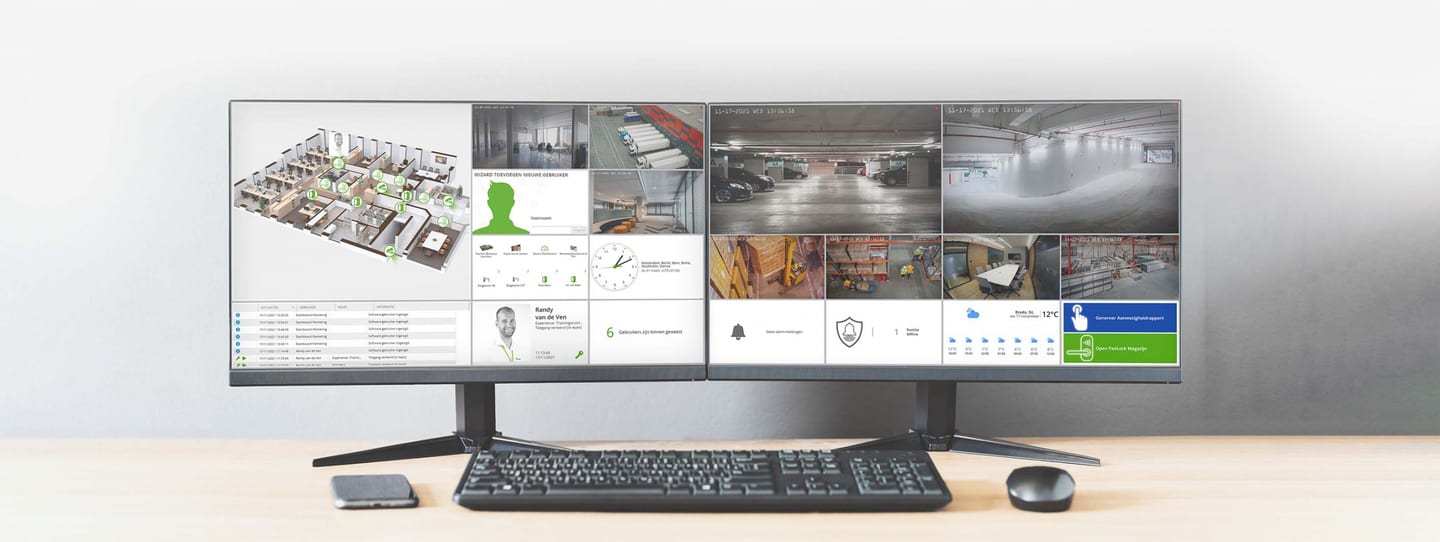
Access control makes all access events and authorisation profiles simple to manage and easy to review. You decide which group of users may use which door, and on which schedule. You get a complete log, and the system can send alerts when unauthorised users try to enter the protected building. Some other things access control can do:
- Anti-passback
- Alerts for unauthorised access attempts
- Integration of all electric doors, locks and gates
- Attendance and time recording
- Integrations with alarm, fire, number plate recognition, lifts and the KNLTB MeshLink link for tennis clubs
What access control can do
Types of access security
Access security is a broad term. Some examples of access security using (electronic) access control are:
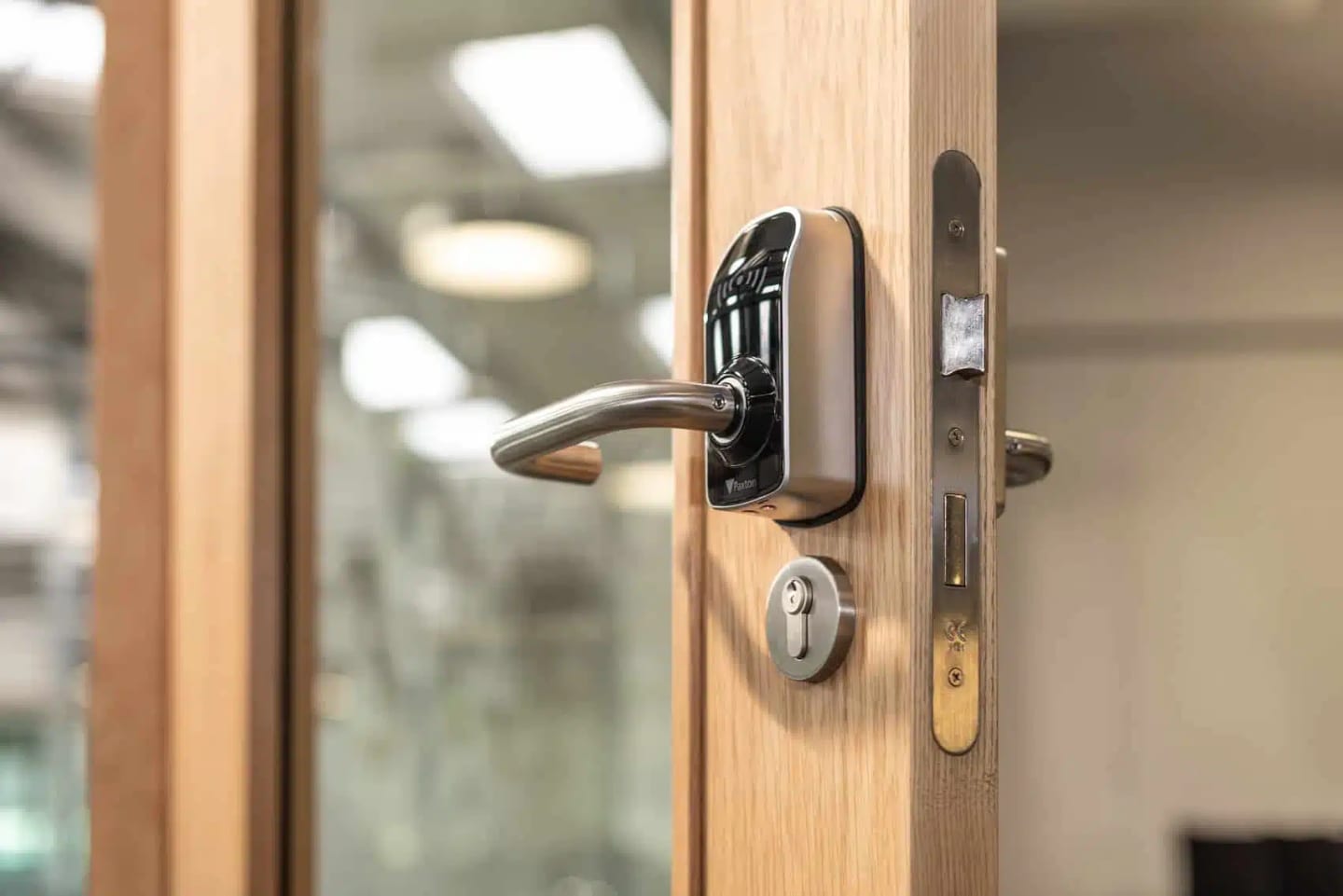
- Readers built into door handles
- Access control cylinders
- Turnstiles
- Fingerprint scanners
- Biometric access control
Different types of credentials
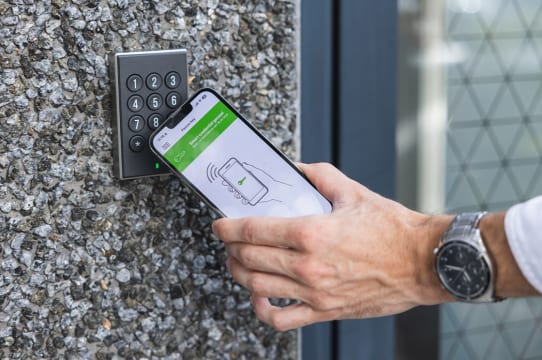
Depending on the needs and requirements of your organisation, you may prefer a particular type of credential. The options are:
- Number plate
- NFC chip
- Paxton Key app
- Access code
- Fingerprint
- Access card or fob
Card readers and door controllers
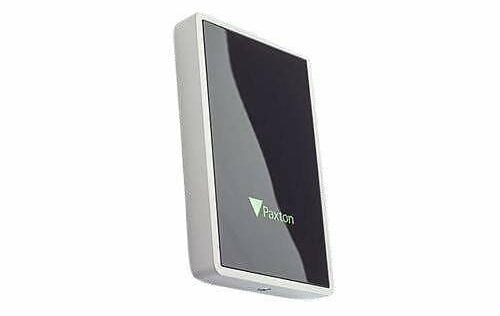
Access control card readers
Card readers grant access to a building or room using a credential. This can work with technologies such as an NFC chip, RFID card, biometric authentication or access code. It is suitable for almost any business.
You can grant access remotely, and the software also shows who presented their card and when. This gives you full control over access without having to hand everyone a physical key.
Access rights can be changed or revoked remotely, so managing access stays flexible and easy to adjust. It also gives you clear insight into access events and keys issued.
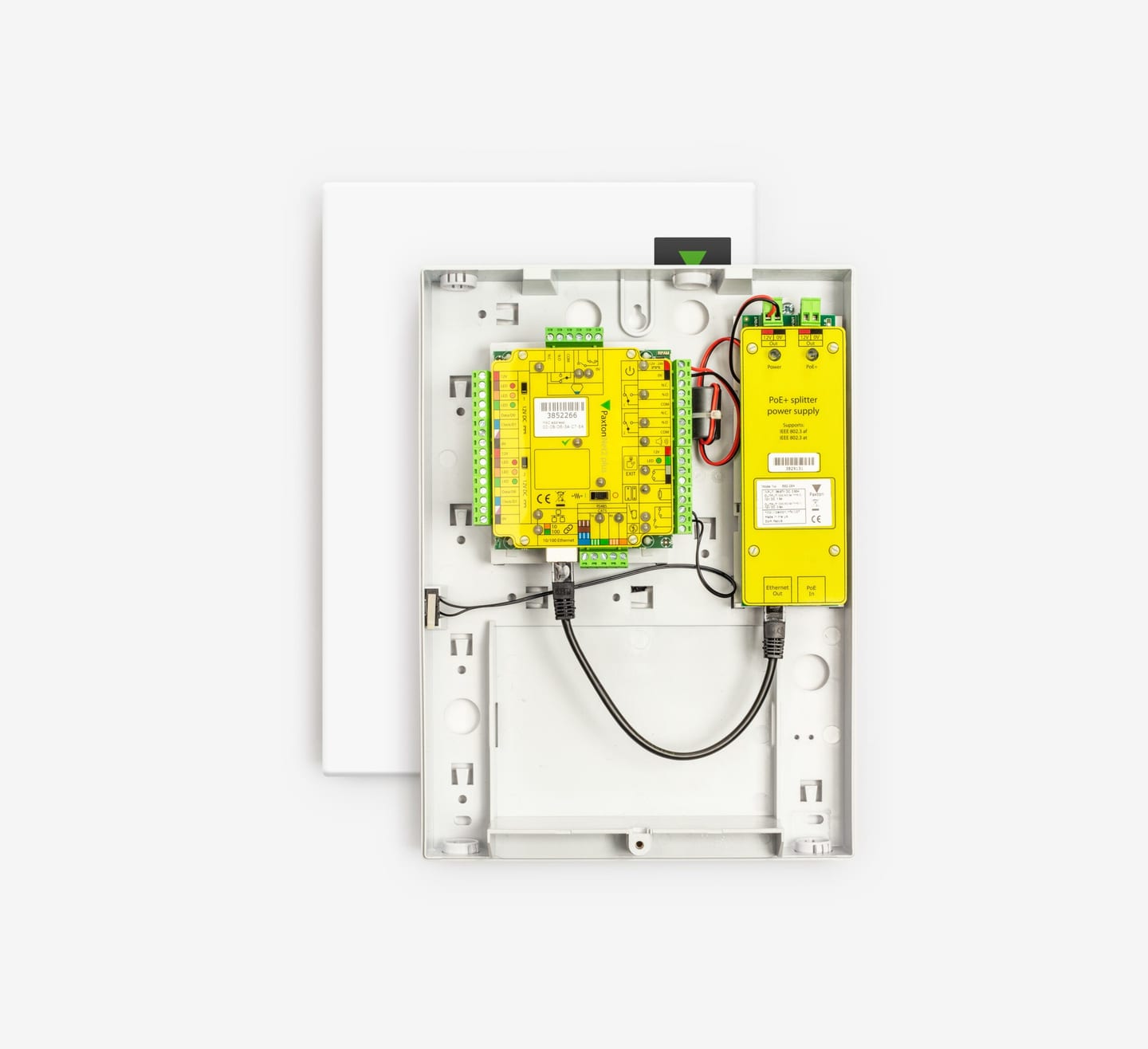
Door controller units
So an access control system offers many advantages over the old-fashioned physical key. But how secure is an access control system itself?
Access control systems for buildings
New office buildings are nowadays almost always fitted with an access control system. The convenience it brings easily outweighs the investment. Here are a few examples of why an access control system for a building pays for itself:
Old-fashioned keys for every door
Carrying bunches of keys everywhere is not only impractical for businesses and organisations, it is also much less secure. Keys are easily lost and sometimes hard to replace.
With an access control system in a building, fobs or cards are easy to replace. If these RFID fobs or cards are lost, you can simply block them in the software.
They are also easy to replace with new ones for just a few euros. The old profile is loaded again, so all access rights stay the same. Very convenient.
Blocking access for former employees and unauthorised persons
When an employee leaves, it can sometimes cause problems. Not everyone leaves on good terms, and former employees do sometimes misuse their access to enter certain rooms.
That makes it easy to take equipment or sensitive data.
With an access control system in your building, you can block access in advance, so the employee concerned can no longer enter unaccompanied. This is the best and, above all, the easiest way to protect your property.
Insight into use and access
With an access control solution, you can easily look up each person's access events. This lets you check when an employee arrived or left.
This can also be linked to a time recording system, so you spend less time recording hours.
In short, access control systems for buildings pay off. We are happy to help you roll out and implement such solutions. Request a no-obligation quote.

31years of experience
Why RRB Security?
- Certified Paxton installer
- No-obligation quote on site
- Tailor-made service plan
- Advanced solutions
- Specialised in security technology
The benefits of Paxton
RRB Security provides security solutions for small to large organisations. We take care of your security from start to finish and work with targeted solutions. For access control, our preference is Paxton. The benefits of Paxton:
- Reliable, high-quality components
- Free lifetime software updates
- Scalable and easy to expand
- Fully manufactured and supported in the UK
More about Paxton access control
RRB Security for your access control projects
RRB Security has been installing security systems since 1995. Of course, we also offer other services such as camera security, alarm systems and video intercoms. Together with our IT specialists, we build tailor-made solutions for your specific situation.
With an access control system, every member of staff or visitor receives a personal key that gives access at every door, gate or barrier. They simply hold their key to the reader and access is granted or denied, depending on the rights they have been given.
If a key is lost, no locks need to be replaced. So you can always be sure your building is secure, which is not possible with ordinary locks and keys.
Together we look at your requirements and what you would like the system to do. If you wish, we can combine access control with CCTV and an alarm system connected to an alarm receiving centre (ARC). Curious about all the options and costs? Request a quote today and we will be happy to visit you for a no-obligation conversation.
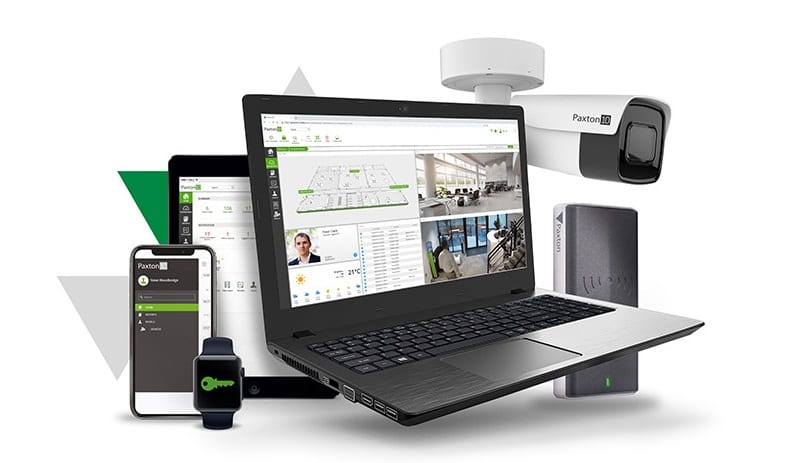
Paxton Net2, Paxton10 and Paxton Solo
Read more about the Paxton systems we install.
Advice
Access control buying advice
As a buyer, it is important to explain clearly what requirements your access control must meet and what it must be able to do. To help you on your way, we have put together some advice on access control.
Different access methods
Access control systems are an essential part of modern security, using technology to regulate access to buildings, rooms and other protected areas. These systems range from simple electronic locks to advanced networks that communicate with various security components.
A basic element of access control is unlocking doors and gates electronically. Several methods are available, each with its own characteristics suited to specific security needs.
Keypads
These systems require users to enter a code on a keypad to unlock the door. They are cost-effective and easy to install, and each user can have their own code. They are, however, seen as outdated, because a code can easily be passed on without any clear way to trace who did so.
RFID
Radio Frequency Identification (RFID) uses wireless communication between a tag and a reader. Users carry a tag, often a card or fob, that unlocks the door when held close to the reader. Every card has a unique ID, so each card issued can be given different rights.
Biometric verification
These systems use unique physical characteristics, such as fingerprints or iris scans, to verify identity. They offer a high level of security, as biometric data is hard to copy.
Mobile access
Modern systems such as Paxton10 let you use smartphones and other mobile devices as access keys. They use technologies such as Bluetooth or NFC (Near Field Communication). This offers convenience and flexibility for users. These apps use security algorithms to prevent credentials from being cloned. This is also known as 'smart credentials'.
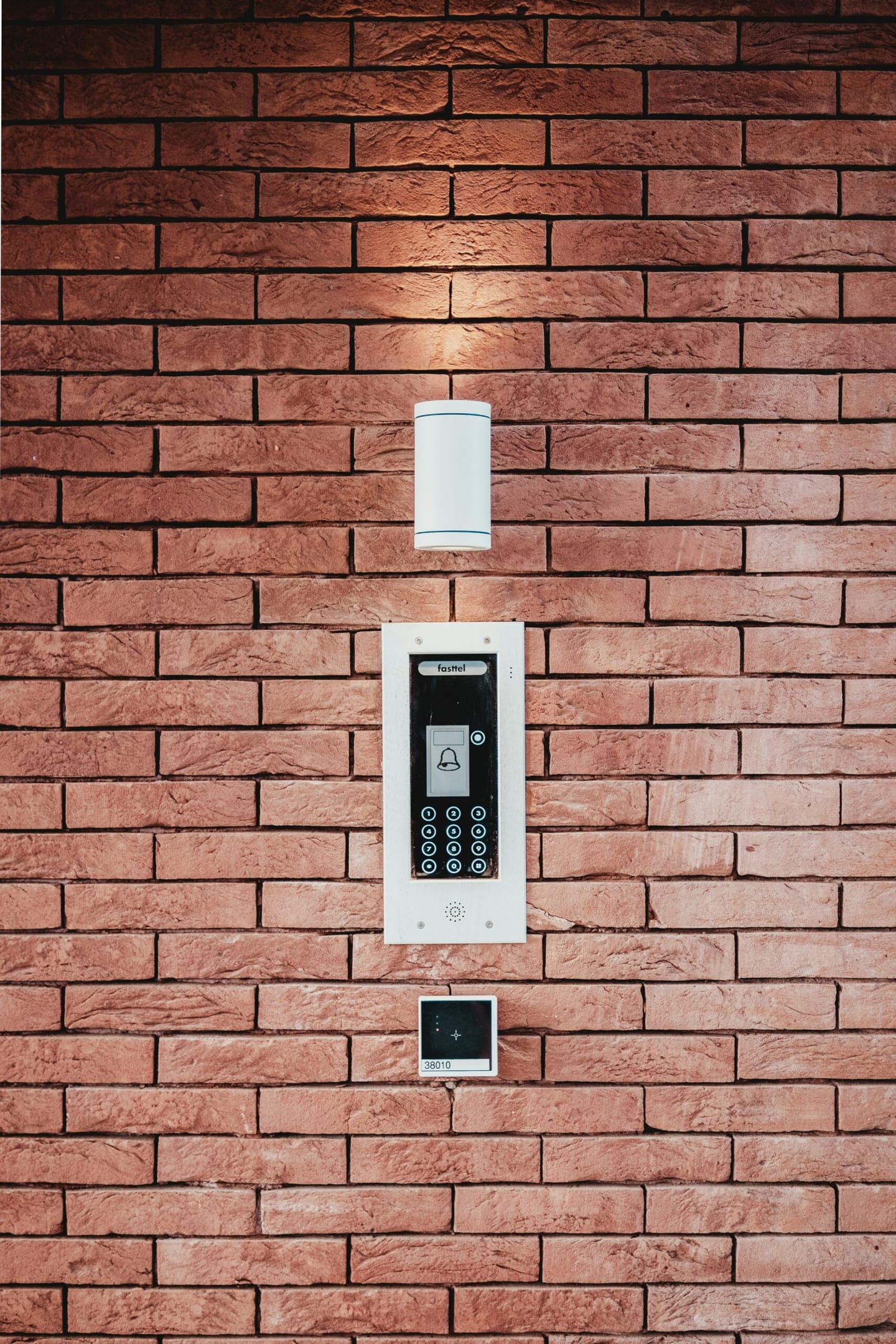
Powering access control equipment: PoE or mains power?
Access control systems are a crucial component of today's physical security. How these systems are powered matters a great deal for their reliability and efficiency.
The two most common ways to power access control hardware are Power over Ethernet (PoE) and the standard 230 V mains supply. Most equipment uses a power supply to convert 230 V to 12 or 24 V to run the controller itself.
The main differences and advantages of both power options
Power over Ethernet (PoE)
Power over Ethernet is a technique that sends power together with the data signal over a standard twisted-pair UTP cable. This means network equipment such as access control systems can receive both power and signal through the network cable, with no need for a separate power supply.
Advantages of PoE (power over Ethernet)
Simple installation
With PoE, there is no need for separate electrical wiring to the door controller, also known as the ACU (access control unit). This can simplify installation and reduce costs.
Flexibility
Access control devices can be placed anywhere a network cable can reach, without depending on a nearby power socket.
Reliability
PoE is supplied through a network switch that can also be connected to a UPS (uninterruptible power supply), which ensures a constant and reliable power supply. Access control systems also use very little power, so they can keep running for quite some time if the mains supply is interrupted.
Safety
Because it uses low-voltage power, connecting access control systems carries little to no safety risk.
Remote control
When Power over Ethernet is supplied through a managed switch, PoE ports can be managed remotely. This makes it possible to power-cycle an access control door controller remotely. It also gives insight into the power consumption and the network traffic to and from the controller.
230 V mains power
The traditional way to power access control hardware is from the standard 230 V mains supply. This is the standard voltage for electrical appliances in many countries, including the Netherlands. It usually requires an adapter to convert 230 V to 12, 24 or 48 V.
Advantages of 230 V mains power
Power
For systems that need more power than PoE can deliver, 230 V is the stronger alternative. Large, heavy locks may need mains power to work.
Universal
Every site has access to mains power, which makes it a standard option for access control. It can also be used more easily, without extra components such as PoE switches.
Differences between PoE and mains power for access control
The main differences between PoE and 230 V mains power lie in installation complexity, power capacity and flexibility of placement. PoE is often simpler and cheaper to install, while 230 V systems are better suited to hardware that needs more power than PoE can sometimes provide.
Conclusion
The choice between PoE and 230 V mains power depends on the specific project requirements. PoE offers great flexibility and ease of installation, while 230 V mains power can be the better option for systems that need more power and where a constant, stable supply is essential.
In practice, many organisations choose a combination of both: PoE for smaller, distributed systems and 230 V for installations with higher power needs. For installers and organisations investing in access control systems, it is essential to weigh up the advantages of PoE and 230 V, so they choose the type of power that fits their specific security needs.
Common access control brands
There is a wide range of access control solutions. Some are aimed at hotels, others at high-security environments, corporate offices, car parks and so on. Some of the most common manufacturers in the Netherlands:
Paxton
Paxton is a leading manufacturer of electronic access control, video management and door entry systems. Paxton has been working on online and offline access control systems for more than 35 years. All of Paxton's manufacturing and development takes place in England.
HID
HID Global Corporation, founded in 1991, has had a significant influence on the development of access control systems. The company became known for its proximity card technology, which emerged in the 1990s. This technology uses RFID (Radio Frequency Identification) to communicate with the reader without direct contact.
Genetec Synergis
Genetec Synergis is part of Genetec Security Center, a unified security platform that combines security functions such as video surveillance, access control and number plate recognition. Genetec's history begins in 1997, when the company was founded in Canada. Genetec has since grown into a leading supplier of open-architecture security solutions.
Synergis is the access control system within Genetec Security Center. It was introduced as part of the company's vision of a single platform that integrates different security functions. The idea was to develop a system that not only works standalone but can also communicate and work with other systems, such as video management and automatic number plate recognition (ANPR).
Access control manufacturers and their software:
- Paxton: Paxton Net2
- Genetec: Synergis
- Vanderbilt: ACT365
- 2N: Access Commander
- LenelS2: OnGuard

Access control integration options
Access control is a crucial part of modern security systems, designed to prevent unauthorised access to physical and digital environments. It can be integrated with various other types of security system to provide layered, robust protection. Below is an overview of access control systems and their possible integrations.
Integration with CCTV
One of the most common integrations is between access control and CCTV. When an unusual access attempt is detected, the CCTV system can automatically bring up the footage from the relevant security camera. This lets security staff or others involved respond quickly and judge whether there is unwanted behaviour.
Integration with alarm systems
Access control systems can also be integrated with intruder detection and alarm systems. For example, you can arm the alarm system using an intercom with a keypad. Software integrations, such as seeing which zone a detector has triggered in or locking all doors when the intruder alarm goes off, are further examples of integration with intruder alarms.
Fire and safety systems
In an emergency such as a fire, access control systems can work with fire and safety systems to make evacuation easier. Doors can be unlocked automatically so that escape routes are clear. Closing lift doors in a fire is another example.
Access with smart devices
Mobile access control solutions, which use smartphones and other mobile devices as keys, are on the rise. These systems are convenient for users and improve security with dynamic authentication methods such as GPS location, biometric data and time-limited access rights.
The future of access control integrations
As technology continues to develop, the options for integrating access control with other security systems will grow. Think of integration with Internet of Things (IoT) devices, where access control systems respond automatically to sensor data or user actions.

Attendance recording with access control
Attendance recording within access control systems is essential for many organisations. It means recording who is present, when and where, within a building or site.
This data is crucial for various business processes, including security, HR management and compliance with legal requirements. Building attendance recording into access control gives insight into, and control over, physical access and the presence of staff and visitors.
Why attendance recording matters
The importance of accurate attendance recording cannot be overstated. It is a tool for improving security, making staffing policy more efficient and keeping accurate track of working hours, which in turn affects payroll. In an emergency, you can quickly see who is in the building, which is essential for an effective evacuation.
Attendance recording technologies
Modern attendance recording systems use various technologies, such as RFID chips, biometrics (such as fingerprint and facial recognition), magnetic cards or PIN keypads. These technologies can also be linked to mobile apps, so employees can record their attendance on their smartphone.
Data analysis and reporting
The data collected can be analysed to produce detailed reports. These reports are valuable for management purposes, such as optimising staffing levels, tracking employee performance and ensuring compliance with employment laws and regulations.
Compliance and legislation
Attendance recording plays a key role in compliance. It enables businesses to meet the legal requirements on working hours and attendance, such as those set out in the Dutch Working Conditions Act (Arbowet) and the Compulsory Identification Act (Wet op de identificatieplicht).
Wireless door handles and access control
Wireless electronic door handles have become an integral part of access control systems. These advanced handles improve security and make access easier by making traditional keys unnecessary.
In a world where wireless technology and smart integrations are becoming the norm, wireless door handles are a must for anyone looking for an efficient and secure access control solution where running cables is not possible.
How wireless door handles work
Wireless door handles use RFID (Radio Frequency Identification), Bluetooth, Wi-Fi or other wireless technologies to communicate between the handle and an authorised access system. Users can gain access with RFID tags, smartphones, special cards or biometrics. These systems are easy to install, with no need for extensive wiring or complex infrastructure.
Advantages of wireless door handles
A major advantage of wireless door handles is flexible access management. Access rights can be managed remotely when the handles are connected to a central server. This makes it easy to grant or revoke access rights, which is ideal for environments where access needs change regularly, such as offices or hotels.
Installing wireless door handles is also often simpler and less disruptive than installing traditional access control systems. This makes them an attractive option for both new and existing buildings.
Integration and smart building management
Wireless door handles fit perfectly with the trend towards smart buildings and can be integrated with building management systems. This improves security and also energy efficiency: doors can, for example, be linked to lighting and climate control systems, which can save energy.
A future-proof solution
A wireless door handle is a future-proof investment. Software updates can add new features and improved security protocols without any physical replacement. This makes wireless door handles a sustainable choice for access control.
Why it matters for organisations
For organisations, introducing wireless door handles is a step towards modernising access control. It lets them manage access quickly and easily and generate reports on access data, which supports compliance and operational efficiency.

Frequently asked questions
Frequently asked questions
Can't find your question? Our specialists are happy to help with advice that fits your situation.
Why choose access control?
With an access control system, you can see at any time who has presented their card or tag. You can set access flexibly by day, hour or week, and you can temporarily deny or block access for individual people.
Paxton access control
RRB Security works with Paxton Net2, Paxton10 and Paxton Solo. Net2 is access control on PC, web and app; Paxton10 combines access control and cameras in one system; Solo uses your phone as the key. You can read more about the brand on our Paxton access control page. Does your product break down within 5 years? The warranty applies under the manufacturer's terms and conditions.
How do I request access control?
If you send us a request for an access control system through our website, we will contact you, with no obligation, to arrange a site visit. We assess your wishes and requirements on site. Shortly after our visit, you will receive a no-obligation quote for installing an access control system.
What happens to the doors in a fire or other emergency?
In an emergency, the door can always be opened from the inside. Doors can also be released automatically so that everyone can leave the building safely. We therefore recommend an annual test and maintenance.
Can access control work with CCTV and alarm systems?
Yes. If there is an unusual access attempt, the CCTV system can automatically show the footage from the relevant camera. You can also, for example, arm the alarm system using an intercom with a keypad.
Personal advice
Contact form
Tell us briefly what your request is about. We will contact you personally.
- No-obligation advice and quote
- Quick response from a specialist
- Specialised in security technology
No-obligation quote
Personal advice from a specialist
We will contact you as soon as possible.