
Explosion-proof IP cameras (ATEX)
Specialised in supplying ATEX cameras for Ex zones
We install explosion-proof IP cameras for ATEX zones, also known as ATEX cameras or Ex cameras. These cameras must meet specific requirements to comply with regulations.
We install, commission and maintain these explosion-proof security cameras for companies in sectors such as chemicals, refineries and fuel storage.
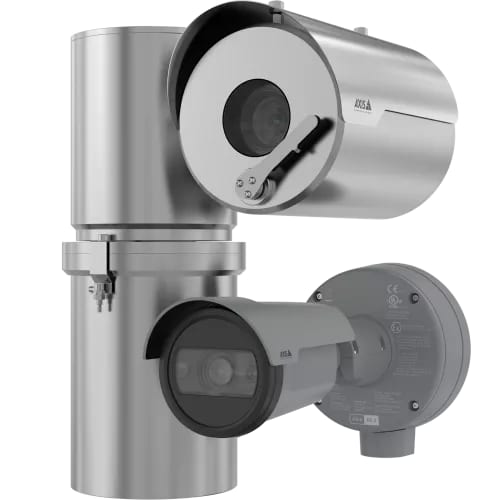
ATEX cameras
Explosion-proof cameras, professionally installed
We supply, install and maintain ATEX-certified IP cameras for Ex zones in industries including chemicals, refineries and fuel storage.
No-obligation on-site consultation
We assess your installation and zones on site. You then receive an open quote that specifies the right hardware.
Specialist in ATEX solutions
ATEX requires a tailor-made approach: Zone 1 or Zone 2, thermal or optical, fixed or PTZ. Together with you, we determine the right type of camera and integrate it into your video management solution.
Management and support
Our service desk and a dedicated specialist support you after handover. With a service plan, firmware and software stay up to date.
Leading-brand equipment and maintenance
We work exclusively with leading-brand products and put the emphasis on professional installation. Periodic maintenance keeps the cameras reliable in harsh conditions.
- Specialised in ATEX-certified IP cameras
- No-obligation consultation
- Emphasis on professional installation
- Tailor-made solutions
- Leading-brand products only
- Detection of flammable substances
- Can be integrated into video management solutions
- Extendable warranty periods
Trusted across the Benelux
These organisations trust our solutions
















ATEX solutions require a tailor-made approach
A lot happens before an ATEX-certified camera is installed, from the certification required to choosing the right type of camera. Zone 1 or Zone 2 hardware, thermal or optical, fixed or PTZ: everything must be perfectly matched to the hazardous location.
Our specialists are happy to advise you on the right solution for your potentially explosive environment. Contact us, with no obligation, for expert advice and a safe, certified installation.
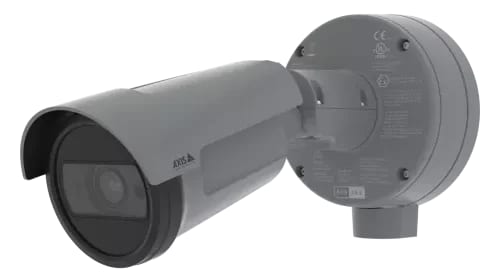
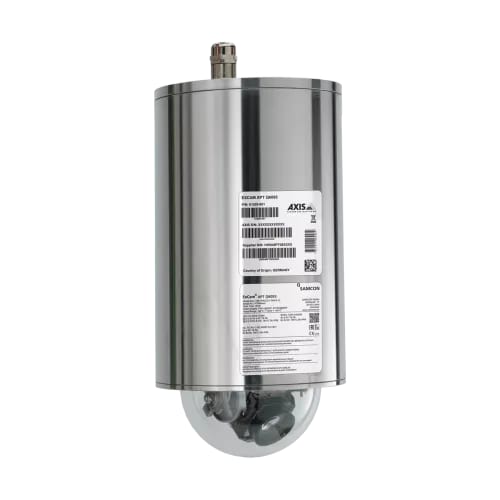
Fixed camera solutions
- Certified for Zone 2 / Division 2 (potentially explosive environments).
- Advanced deep learning video analytics.
- 4K video quality at 60 frames per second.
- Detailed images in any type of light.
- Resistant to impact and extreme weather conditions.
This camera is specially developed for use in potentially explosive areas with a lower risk profile, such as Zone 2 or Division 2. Thanks to its built-in deep learning functionality, the camera automatically recognises relevant events, such as vehicles or people, without external software. With 4K resolution and 60 fps, it delivers razor-sharp images, even in low or bright light.
The robust housing withstands shocks, rain, dust and temperature fluctuations, making this camera ideal for industrial outdoor applications.
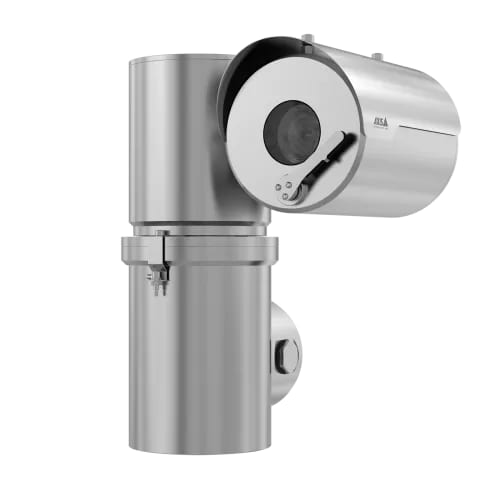
Zone 1 explosion-proof PTZ cameras
- Suitable for ATEX, IECEx, EAC and IA; Zone 1, 21.
- Certified to ATEX, IECEx, EAC and IA.
- Full HD 1080p at 50/60 fps.
- 40x optical zoom for razor-sharp detail.
- Axis Lightfinder 2.0 for optimum vision in low light.
- Automatic tracking of people and objects.
- FIPS 140-2 level 2 security for secure data transfer.
This explosion-proof IP camera is developed for high-risk environments such as oil, gas and chemical plants. The camera meets international standards for explosion safety and can be used in zones where there is a risk of gas or dust explosions.
Thanks to high image quality, a powerful zoom and smart features such as tracking and light optimisation, the camera provides reliable video surveillance, even in challenging conditions. Advanced security also protects the camera data against unauthorised access.
For every environment
Camera security in every sector
Professional camera security needs different technology, coverage and integrations at every location. RRB Security delivers tailor-made solutions for a wide range of environments.
- Industry
- Logistics
- Container terminals
- Industrial estates
- Government
- Municipalities
- Education
- Healthcare
- Retail
- Restaurants and bars
- Offices
- Owners' associations (VvE)
- Construction sites
- Parking facilities
- Sports venues
- Data centres
- Homeowners
Explosion-proof ATEX cameras: certifications, requirements and practical information
What exactly does ATEX certification mean? ATEX (ATmosphères EXplosibles) is a European directive that specifically covers equipment used in potentially explosive environments.
The aim of the ATEX directive is to prevent explosions and to protect employees working in potentially hazardous areas. Equipment with ATEX certification meets strict safety requirements, which are also reflected in certification schemes such as IECEx (international) and EAC (Eurasian).
Which Ex zones are there? Potentially explosive environments are classified into different Ex zones based on the risk and how often an explosive atmosphere is present.
- Zone 0: hazardous atmosphere present continuously or for long periods (for example, inside tanks containing flammable substances).
- Zone 1: hazardous atmosphere present regularly or occasionally (for example, around storage tanks and pipework).
- Zone 2: hazardous atmosphere present very occasionally or only briefly (rarely present during normal operations).
There are also zones for explosive dust:
- Zone 20: hazardous dust atmosphere present continuously.
- Zone 21: hazardous dust atmosphere present occasionally.
- Zone 22: hazardous dust atmosphere present rarely.
ATEX cameras and installation requirements
Specific regulations and requirements apply when installing ATEX-certified cameras, to guarantee safety:
- Housing and materials: ATEX cameras have special robust housings, usually made of corrosion-resistant stainless steel (316L), aluminium or high-grade plastic. This prevents sparks and protects against external influences such as chemicals and moisture.
- Cabling: cables must be fitted with ATEX-certified cable glands and connections. These prevent explosive gases and dust particles from getting in.
- Earthing and equipotential bonding: correct earthing and equipotential bonding of ATEX cameras and the associated equipment is essential to avoid static electricity.
- Mounting: the cameras must be mounted securely and free from vibration, in locations that meet the specifications of the Ex zone concerned.
- External influences: take account of environmental factors such as temperature, vibration and humidity. Cameras must be suitable for the specific conditions of the location.
ATEX cameras come in various versions and models
- Fixed cameras: specially designed for continuous observation of critical installations such as pumps, storage tanks and access gates.
- PTZ cameras (pan-tilt-zoom): for situations where dynamic and flexible observation is required. They provide excellent detail through powerful zoom functions.
- Thermal cameras: help detect temperature anomalies and potential risks, such as leaks or a developing fire, at an early stage.
- Multisensor cameras: combine optical and thermal imaging technology to provide comprehensive surveillance of complex industrial areas.
Maintenance and inspection of ATEX cameras
- Visual inspection: periodic checks for damage, corrosion or wear on the housing, cables and fixings.
- Functional testing: regular checks that the cameras and any automatic functions are still working properly.
- Cleaning: keeping cameras, lenses and housings clean to prevent dirt and visual obstructions.
- Certification check: mandatory periodic recertification or inspection by certified specialists to confirm that the equipment still meets all ATEX regulations.
Frequently asked questions
Frequently asked questions
Can't find your question? Our specialists are happy to help with advice that fits your situation.
No-obligation advice on installing ATEX-certified cameras
We are happy to visit your site, with no obligation, and advise you on the use and placement of CCTV.
Periodic maintenance and support
We offer (optional) service plans for maintaining the systems we supply. If an internet connection is available, we can also automatically and periodically check that the system is still working properly.
Where can I find more frequently asked questions?
View more frequently asked questions about how we work, quotes and costs.